
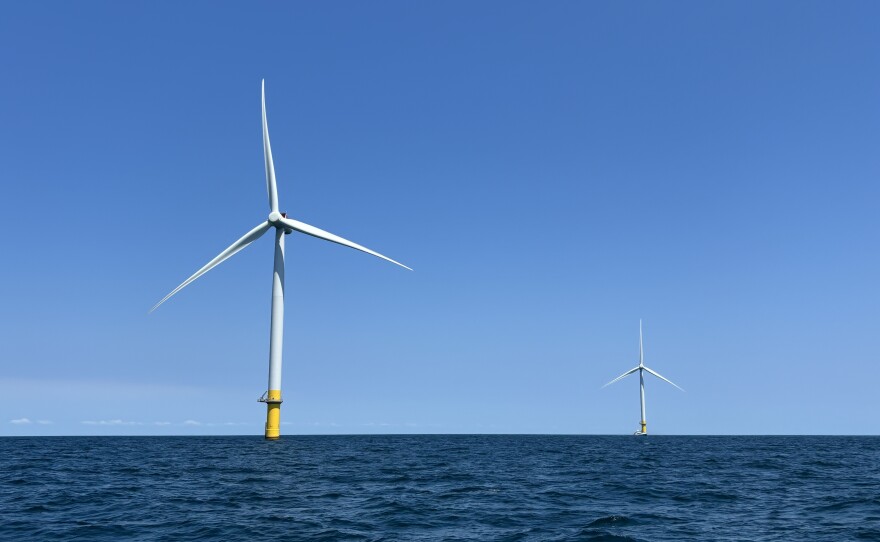
Colombia has over 65% of electricity generated from hydropower, contributing to its clean energy credentials. However, renewable energy expansion in onshore solar and wind encounters delays and setbacks. This is particularly due to permitting delays, grid limitations, and investment challenges. In this case, offshore wind farms are gaining strategic importance for sustainable power generation and energy diversification. The Caribbean coast provides some of the strongest wind resources, with average wind speeds ideal for utility-scale development. According to the Ministry of Mines and Energy, Colombia has the technical potential to develop up to 50 GW of offshore wind. The government is taking decisive steps to fast-track offshore wind. These include the offshore wind roadmap, the first offshore wind auction, the dropout clause added, and the development of port and maritime infrastructure plans to support turbine assembly and logistics. Distribution arresters divert excess voltage to ground and prevent damage to wind turbine generators and substation transformers.
Distribution arresters are crucial components in offshore wind farms to protect electrical equipment from voltage surges. These surges arise from lightning strikes, switching operations, or grid faults. When circuit breakers or switches operate, they generate transient overvoltages. The arresters clamp the surges to protect sensitive electronics in converter stations and control systems. Offshore wind farms in Colombia will connect to weak or underdeveloped grids. Voltage fluctuations from grid faults can damage equipment. To solve this, distribution arresters stabilize voltage and ensure compliance with Colombian grid codes. The arresters used must withstand saltwater corrosion, high humidity and UV exposure, and mechanical stress from waves. Additionally, the arresters must handle DC surges, which are harder to suppress than AC.
Distribution arresters in offshore wind farm development in Colombia
Offshore wind environments face harsh weather, high humidity, and salt exposure that increase risks. Distribution arresters play a crucial role in ensuring the stability, safety, and lifespan of offshore wind assets. A distribution arrester is a protective device installed on medium-voltage lines and equipment. Its main function is to divert excess voltage to ground, protect transformers, switchgear, cables, and insulators, and prevent equipment failure and fire hazards. In offshore wind farms, the arresters are able to withstand marine conditions and are installed at the base of each turbine, along subsea and overhead transmission routes, and near onshore substations. The key functions of the arresters in offshore wind farms include:
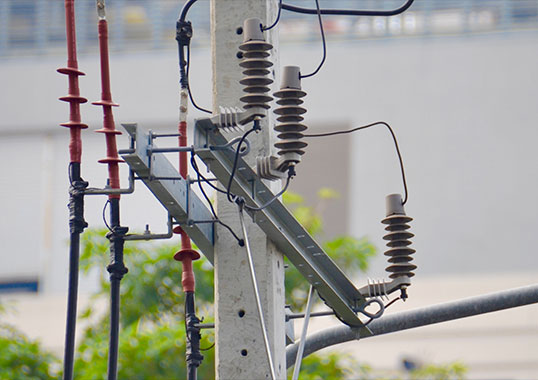
- Lightning protection—offshore wind turbines are tall and isolated structures. A single strike can destroy electrical components. The arrester diverts lightning-induced overvoltage to ground, protects nacelle equipment, transformer windings, and cables, and reduces turbine downtime costs.
- Overvoltage protection during switching operations—routine switching of turbines, substations, or reactive compensation devices that create voltage spikes that exceed insulation ratings. Distribution arresters absorb switching surges before they travel through the electrical systems. The arresters also protect sensitive power electronics like converters and inverters.
- Preventing insulation failure and flashovers—the availability of salt-laden air, humidity, and sea spray increases the risk of surface tracking and insulation breakdown in offshore installations. Distribution arresters limit overvoltage exposure that could break down insulators and help maintain long-term reliability of insulators and bushings.
Key barriers to offshore wind farm development in Colombia
Colombia is taking measures towards tapping vast offshore wind energy potential, boasting world-class wind speeds. The country has an estimated 50 GW of offshore wind capacity that positions the country as a pillar of its long-term clean energy transition. However, despite strong policy ambitions and international interest, the development of offshore wind farms in Colombia faces various challenges. These key challenges include:
- Regulatory and institutional bottlenecks—Colombia’s offshore wind sector involves many regulatory bodies. Issues arising include overlapping jurisdictions, lack of clearly defined project timelines, and prolonged environmental licensing.
- Limited grid and transmission infrastructure—currently, there is no dedicated offshore transmission infrastructure. Existing grids may lack the capacity to absorb inputs, which inhibits bankable project development.
- Lack of offshore wind industry—Colombia has no operational offshore wind farms, which means no local experience with project execution. This makes early-stage projects riskier and more expensive to insure and finance.
- Logistics infrastructure—offshore wind construction and maintenance need specialized port facilities. This is crucial for blade and turbine assembly, cable spooling, jack-up vessels, and heavy lift operations. Colombian ports lack the space, depth, and equipment for large-scale offshore wind logistics.