
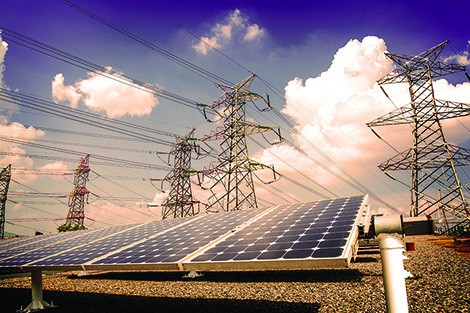
Venezuela’s energy sector is mainly dominated by oil production, having one of the world’s largest oil reserves. This makes energy production and consumption heavily dominated by hydrocarbons. However, economic crises, sanctions, and mismanagement impact the energy sector. The Guri Dam supplies 60-70% of Venezuela’s electricity. Yet recurrent droughts and poor maintenance have led to blackouts. Industries such as transport depend on fossil fuels like oil and gas. This makes the industry prone to price fluctuations and sanctions. The country must address grid stability, diversify energy sources, improve efficiency, and reduce reliance on single points of failure. This is crucial to balance between production and consumption in Venezuela. Additionally, to achieve this balance, the country must aim to reduce reliance on hydropower, fix the falling grid, manage demand through efficiency programs, and secure investments. Stay insulators ensure mechanical stability, electrical insulation, and safety when integrating energy sources into the grid.
High-quality insulators help maintain a reliable connection between generation sources and the main grid. Stay insulators function in guy wires to stabilize transmission poles and towers to prevent collapse. The insulators are crucial in Venezuela’s grid infrastructure to prevent line failures that worsen blackouts. They block unwanted current flow between live conductors and grounded structures. This is crucial in high-voltage transmission lines connecting hydropower plants and thermoelectric plants to substations. Stay insulators will also be crucial in connecting solar and wind energy to the grid. High-performance stay insulators must withstand humidity, salt corrosion, and pollution, which are common in Venezuela. Robust insulators reduce maintenance frequency, which is essential in Venezuela’s shortage of spare parts and skilled labor. Using stay insulators in the infrastructure helps integrate hydropower, fossil fuels, and future renewables into a more resilient system.
Stay insulators in energy integration infrastructure
Venezuela must upgrade its electrical infrastructure to support increased demand, variability, and geographical reach. This is also crucial to integrate oil, gas, thermoelectric, and renewable sources like solar and wind. A stay insulator plays a crucial role in supporting mechanical stability in overhead and distribution systems. The insulator plays a crucial role in safeguarding structural integrity, electrical isolation, and system reliability. A stay insulator is a type of mechanical and electrical insulating device used in guy wire systems. It inserts into the guy wire to prevent the transfer of high-voltage current down the wire to the ground. Here are the functions of the stay insulators in energy integration infrastructure.

- Electrical isolation of guy wires—the insulators prevent the guy wire from becoming electrically live if it contacts an energized conductor. It is essential in high-density urban installations and renewable project zones.
- Mechanical support for transmission and distribution poles—the insulator stabilizes poles under the mechanical load from conductors and insulators. Stay insulators absorb wind stress, conductor tension, and structural sway. They also maintain pole alignment and ensure the reliable transfer of energy from generation sites to substations.
- Improving grid safety and reliability—stay insulators reduce the risk of pole collapse or electrical accidents. This is crucial in wind-prone coastal areas, mountainous regions, and areas where distributed renewable systems are added to weak grids.
- Easing hybrid infrastructure deployment—solar PV and wind projects are deployed in rural and off-grid communities. Stay insulators stabilize smaller poles supporting localized microgrids and ensure safe connections to hybrid systems.
Key barriers to integrating energy resources into Venezuela’s grid
Integrating oil, gas, hydropower, thermoelectric, and renewables into the grid faces structural and systemic challenges. Integrating into a single, resilient national grid demands more than just generation capacity. It demands robust infrastructure, functional institutions, investment, and technical modernization. These barriers include:
- Aging and fragile infrastructure—most of Venezuela’s electrical transmission and distribution infrastructure is outdated and under-maintained.
- Lack of investment and funding—Venezuela’s ongoing economic crisis and hyperinflation crippled public investment in the power sector.
- Inefficient grid management and monitoring systems—the grid lacks advanced supervisory control and data acquisition (SCADA) and smart grid technologies.
- Transmission bottlenecks and regional imbalances—energy generation is mainly in specific regions, while demand centers are nationwide.
- Underdeveloped renewable energy infrastructure—Venezuela has immense solar and wind potential but lacks a national framework and infrastructure to harness it.
- Fuel supply and maintenance issues in thermoelectric plants—most thermoelectric plants face fuel shortages, mechanical failures, or being completely offline.