
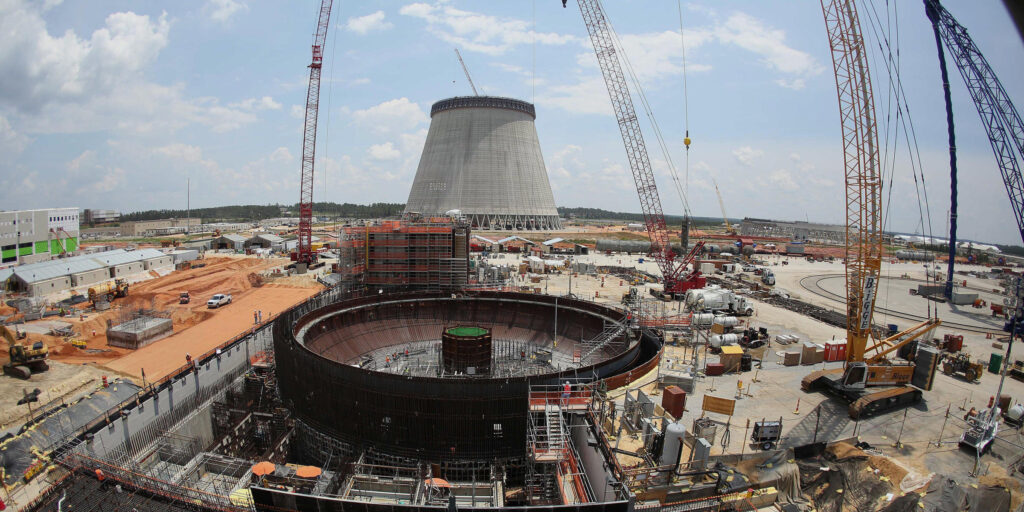
Argentina is in the race to turn decades of nuclear knowledge into a modern SMR industry. The CAREM prototype offers larger ACR-class modules, private investment pitches, and new international partnerships. The successful integration of these projects will create energy security, decarbonize heavy industry, and make South America an SMR exporter. Argentina has been courting private foreign investment and international cooperation from the United States’ initiatives. SMRs provide reliable baseload power and can work closer to load centers than larger reactors. The project could also integrate with renewable energy, such as hydropower, to reduce reliance on fossil fuels. SMR projects also decarbonize the electricity and supply process heat for chemical, desalination, and hydrogen production. Argentina’s SMR development will depend on its competitiveness in price, operation, and financing terms. Spool insulators in SMR development ensure the absolute integrity and safety of the switchyard and transmission connections.
Power line insulators are critical components for building the robust electrical infrastructure needed for SMR projects. Spool insulators mechanically support and electrically isolate high-voltage lines at dead-ends, corners, or crossings. Spool insulators handle the mechanical tension of high-voltage transmission lines. They prevent the high-voltage current in the conductor from flowing to the grounded support structure. This is crucial to prevent short circuits and ground faults and ensure the efficient transmission of power. The use of insulators prevents failure of the transmission system during an earthquake, which is essential for disconnecting the plant from the grid. Nuclear power plants depend on reliable connections to the off-site electrical grid and on backup power if the reactor shuts down. Integration of spool insulators shows Argentina’s capability to manage complex nuclear-grade infrastructure projects from the reactor core.
Significance of spool insulators in SMR project development
Spool insulators mount on poles, crossarms, or walls to support and insulate conductors at low and medium-voltage levels. The conductor ties around the groove of the spool using wire or metal fittings to keep it insulated from the support structure. Spool insulators ensure reliable insulation of distribution circuits within the plant perimeter. Such hardware will support auxiliary grids, communication lines, and distributed electrical networks. Here are the functions of the spool insulators in SMR development in Argentina.
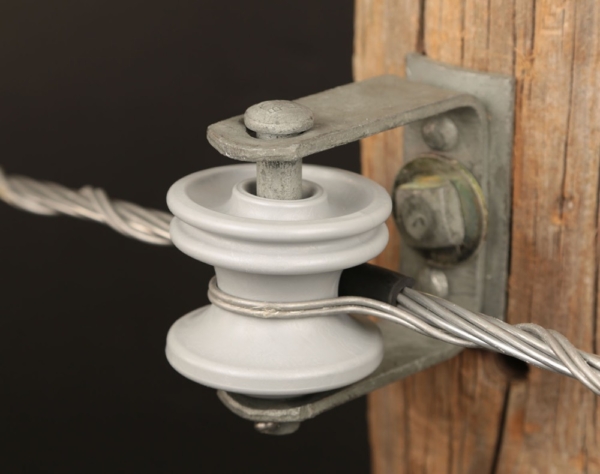
- Insulation of auxiliary power and control circuits—SMRs need extensive auxiliary electrical systems such as lighting, communications, security cameras, and low-voltage power. Spool insulators isolate and support low- and medium-voltage conductors from metallic support structures.
- Reliable distribution for plant site utilities—temporary electrical networks distribute power to cranes, welding machines, and worker camps. Spool insulators ensure safe conductor anchoring and insulation.
- Mechanical strength and load support—the insulators carry the mechanical tension of small spans of conductors. They allow safe use in congested plant areas where space is limited.
- Support for communication and instrumentation lines—nuclear plants need redundant communication lines and monitoring systems. The insulators help suspend and insulate overhead control wiring and signal circuits.
- Durability—spool insulators are from glazed porcelain and polymer composites resistant to weathering, heat, and contamination. This is crucial for SMR facilities that need reliable auxiliary networks with low maintenance.
Significance of U.S. investment and support for Argentina’s SMR development
Argentina’s SMR is an integral, pressurized reactor designed by the National Atomic Energy Commission (CNEA) to provide clean, flexible, and secure power. The CAREM is a prototype that could position the country as a regional SMR leader. Argentina faces financial constraints, construction delays, and regulatory hurdles. Here is the importance of U.S. investment in Argentina’s SMR development.
- Financing and project continuity—The U.S. provides much-needed capital to keep construction and research and development moving.
- Regulatory credibility and global trust—the financial backing offers Argentina access to global best practices in safety, safeguards, and non-proliferation standards.
- Technology transfer and industrial growth—U.S. partnerships provide new research and development, digital instrumentation upgrades, and modular manufacturing. This strengthens the domestic supply chain and positions its firms to compete globally.
- Energy security and decarbonization—financial support speeds up the deployment of SMRs that can integrate with renewable energy. This helps reduce reliance on fossil fuels and power industrial uses like hydrogen production and desalination.
- Geopolitical leverage—the support from the U.S. enhances Argentina’s ability to attract diverse funding sources. This can position itself between major powers competing for influence in South America’s energy sector.