

Wind and solar power capacity in Peru is expected to expand in the near term, with data showing 127 solar projects and 71 wind projects in various stages of progress. The wind and solar projects have a total capacity of almost 33,000 MW. Peru has modified its power generation and electricity rules, allowing distributors to contract energy and capacity separately and introducing supply auctions to increase competition across the different power generation technologies. However, increasing renewable penetration will need complementary investments in transmission, energy storage, grid management, and system flexibility. Renewable energy sources could lead to demand for high-voltage transmission infrastructure, BESS, overhead line hardware, insulators, automatic wedge deadends, and supporting structures. An increase in capacity will also lead to demand for transmission expansion through transmission lines, interconnections, and distribution upgrades. Increasing renewable deployment could support electricity diversification and create a large market for the power-line infrastructure.
Automatic wedge deadends provide mechanical termination to anchor overhead conductors at support structures and electrical continuity. They serve in wind, solar, and hydropower infrastructure to ensure efficient power transmission. The deadends transfer the mechanical load of the conductors to the support structure. Their wedge mechanism helps tension the conductors into the tapered housing. This helps prevent slippage without depending on bolts or crimping. The wedge design distributes the gripping force over a longer section of the cable. This prevents localized crushing or damage to the conductor strands and jacket. The automatic wedge deadends distribute the gripping force over a longer section of the cable. They also absorb and dampen vibrations caused by wind and thermal expansion and contraction.
Quality assurance for automatic wedge deadends used in renewable energy infrastructure
Automatic wedge deadends terminate and anchor conductors in overhead electrical networks. It is crucial to use high-quality wedge deadends in new solar, wind, hydropower, and grid-interconnection projects. Quality assurance covers material quality inspection, checking dimensional accuracy, mechanical load testing, conductor compatibility, corrosion resistance, and vibration resistance. Large solar plants need collection systems and transmission connections to transport electricity from photovoltaic generation facilities toward substations and wider grids.
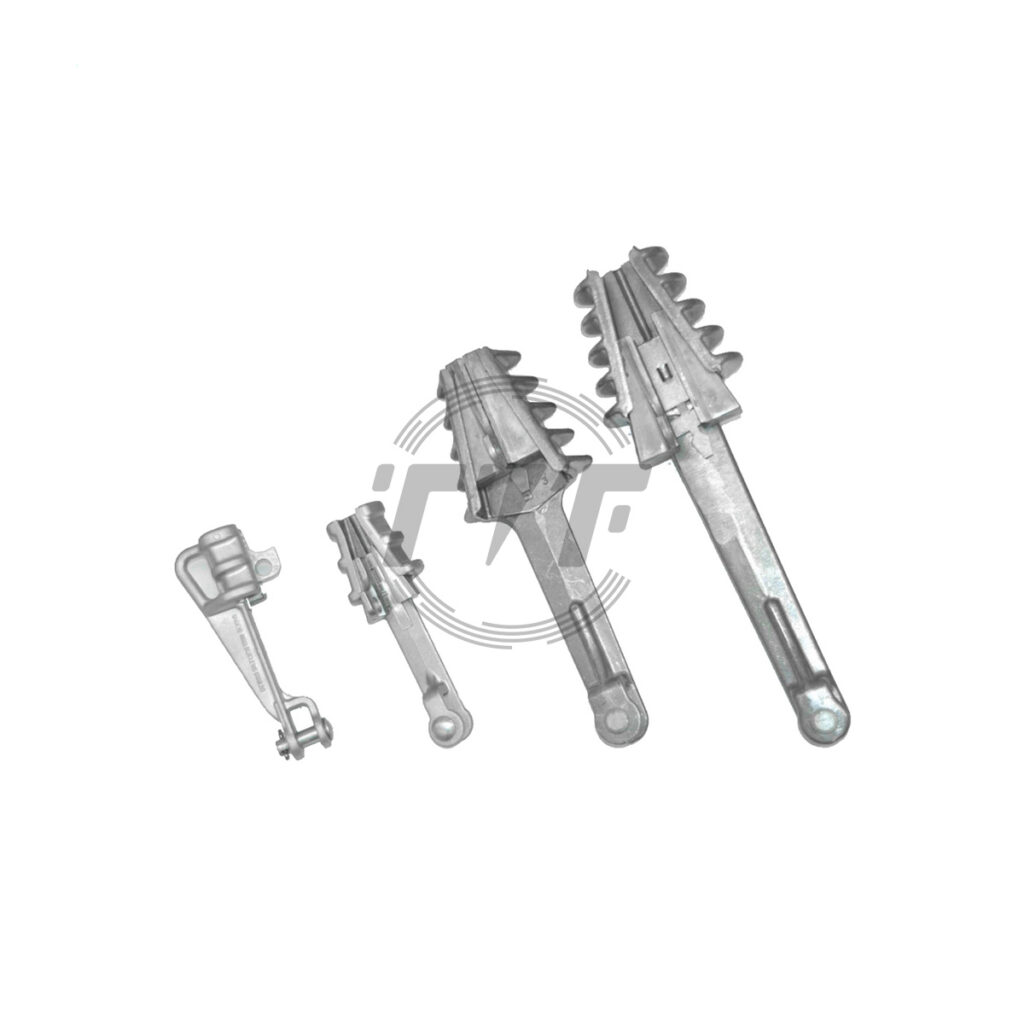
QA ensures that the components maintain conductor retention, resist environmental exposure, fit the specified line hardware, and maintain mechanical integrity. Wind projects need reliable deadends to maintain the mechanical connections between the conductor and the supporting structure. QA helps prevent defects that lead to failures like conductor slippage, mechanical separation, or premature corrosion. These cause maintenance requirements, outages, or damage to adjacent equipment.
Roles of automatic wedge deadends in Peru’s renewable energy projects
Automatic wedge deadends terminate and anchor conductors on overhead power lines. They support the electrical infrastructure connecting solar farms, wind farms, hydropower facilities, BESS installations, substations, and transmission networks. They provide a secure mechanical connection between a conductor and its supporting structure. Its roles in the infrastructure include:
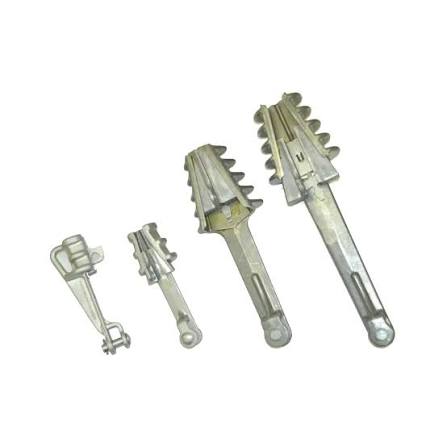
- Supporting solar power infrastructure—large PV plants need collection networks to move electricity from individual generation blocks toward inverters, transformers, substations, and grid-interconnection points. The deadends provide mechanical termination at distribution poles, substations, and line transitions.
- Anchoring overhead conductors—the automatic wedge deadend terminates a conductor at locations where the line changes direction or requires mechanical anchoring. Its wedge mechanism grips the conductor and transfers its tensile load to the deadend body and supporting structure.
- Supporting wind power transmission—automatic wedge deadends can anchor conductors along overhead transmission and distribution networks. They maintain conductor tension and resist mechanical forces from vibration and movement.
- Supporting BESS integration—BESS facilities need reliable electrical connections to solar plants, wind farms, substations, and transmission systems. Automatic wedge deadends provide mechanical termination and anchoring for these systems.
Challenges to address to strengthen energy security and diversify its energy mix
Peru has renewable resources in solar, wind, and hydropower. Turning the resource base into a more secure and diversified energy system needs coordinated investment in generation, transmission, storage, and energy access. The national planning documents identify grid modernization, renewable generation, and storage as important for long-term energy security. To achieve this, Peru should expand transmission infrastructure, integrate more viable renewable generation, develop energy storage, and improve permitting and project execution. The country should also strengthen the distribution networks, prepare for climate and hydrological risks, and maintain reliable conventional generation during the transition. Addressing these challenges could help improve the resilience of the SEIN. The result would depend on how effectively generation, transmission, storage, distribution, and planning are developed as an integrated system.