
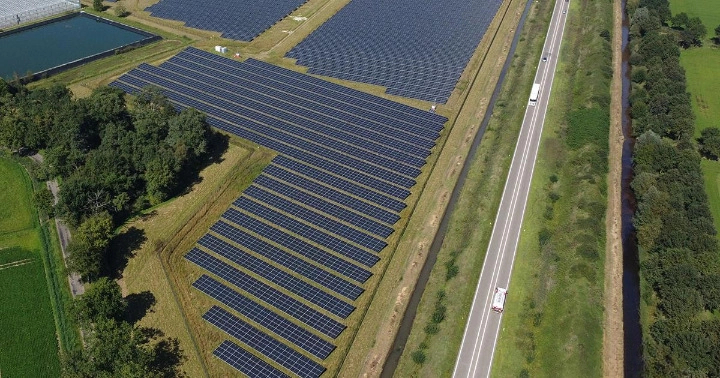
Argentina added the 180 W Anchoris solar park to its grid, providing enough electricity to power the region. Solar power could help displace fossil fuel-based generation to reduce the national carbon footprint. The successful integration of the solar project diversifies the energy mix and enhances energy security by reducing over-dependence on a single source. The new solar park provides a reliable source of electricity for the local grid to support key industries in the region. It also brings new, high-tech industry to the region. However, to achieve a resilient and sustainable energy future, the Anchoris must focus on grid modernization and expansion, create a stable, investment-friendly economic climate, and navigate the long-term strategy that balances the potential of the Vaca Muerta with clean energy transition. Helical deadend clamps are crucial components used to securely end and support guy wires stabilizing solar panel mounting structures and the substation infrastructure.
The solar panel mounting structures face wind loads and weight that cause uplift and lateral forces that can bend, twist, or topple the support structures. To counteract these forces, key support posts at the ends of rows or on sloping terrain are braced with guy wires. The wires run from a high point on the structure down to a ground anchor deep into the earth. Helical dead-end clamps connect the guy wire to the anchor point on one end and to the solar structure on the other. It creates the strong, non-slip termination needed to keep the entire system under tension and stable. Helical deadend clamps are able to handle the very high tensile loads needed to keep massive structures from moving. The dead ends are from galvanized steel or aluminum that is highly resistant to corrosion from rain, humidity, and soil.
Functions of helical deadend clamps in the Anchoris solar park
Helical deadend clamps are crucial in the Anchoris solar park to keep the electrical infrastructure reliable and safe. The clamps play a crucial role in anchoring conductors, preserving mechanical and electrical integrity, and ensuring the long-term safety and reliability of power delivery. Here are the functions of the helical deadend clamp in solar farms.
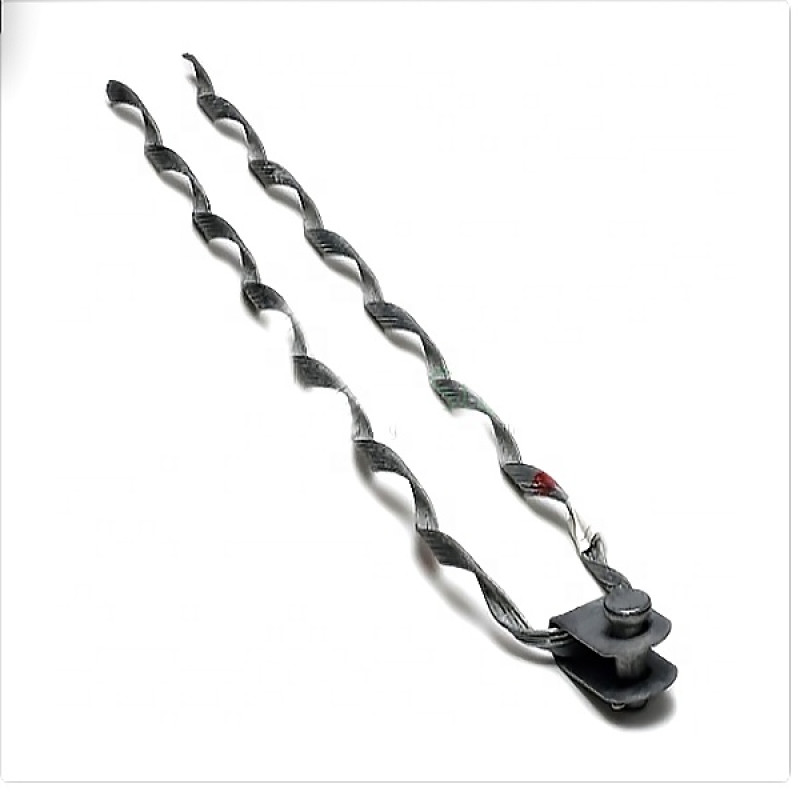
- Securing conductors in overhead lines—solar-generated electricity travels from the solar arrays through overhead distribution and transmission lines. Helical dead-end clamps end and secure conductors at poles to hold them firmly under mechanical tension.
- Ensuring mechanical strength—helical deadend clamps distribute the mechanical load evenly along the conductor without causing damage to the strands. This prevents wire slippage and ensures uninterrupted power delivery from the solar farm.
- Maintaining electrical performance—helical deadend clamps are able to maintain the conductor’s electrical integrity. They prevent hotspots or resistance build-up in solar parks.
- Corrosion and weather resistance—helical deadend clamps are from galvanized steel or aluminum alloy that resists corrosion.
- Safety and grid stability—the clamps reduce the risk of conductor snapping under stress, protect against outages caused by mechanical failures, and enhance the stability of the local transmission network feeding the national grid.
Innovations supporting the Anchoris solar park in Argentina
The Anchorage solar park is powered by various technological innovations such as smart inverters, infrastructure upgrades, and digital tools. These innovations make Anchoris a model for Argentina’s renewable future that is scalable, efficient, and resilient. These innovations include:
- Advanced PV technology—the park uses high-efficiency solar modules like monocrystalline or bifacial panels. This helps capture more sunlight and generate higher yields per square meter.
- Single-axis tracking systems—Anchoris uses tracking systems that rotate the solar modules to follow the sun’s movement. This increases energy production by 20-25%, making the park more productive without the need for more land.
- Smart grid integration—the Anchoris uses grid-friendly inverters and smart controllers. These systems regulate voltage and frequency, enabling seamless integration while supporting grid stability.
- Efficient transmission infrastructure—innovative line fittings and hardware such as helical deadend clamps strengthen the park’s electrical infrastructure.
- Digital monitoring and SCADA systems—the solar park has supervisory control and data acquisition systems. These allow operators to track performance in real time, detect faults, optimize output, and schedule predictive maintenance.
- Hybrid potential with energy storage—the solar park has the potential to integrate battery energy storage systems. This would allow the park to store excess energy, improve Argentina’s energy reliability and reduce reliance on gas-fired peaker plants.