
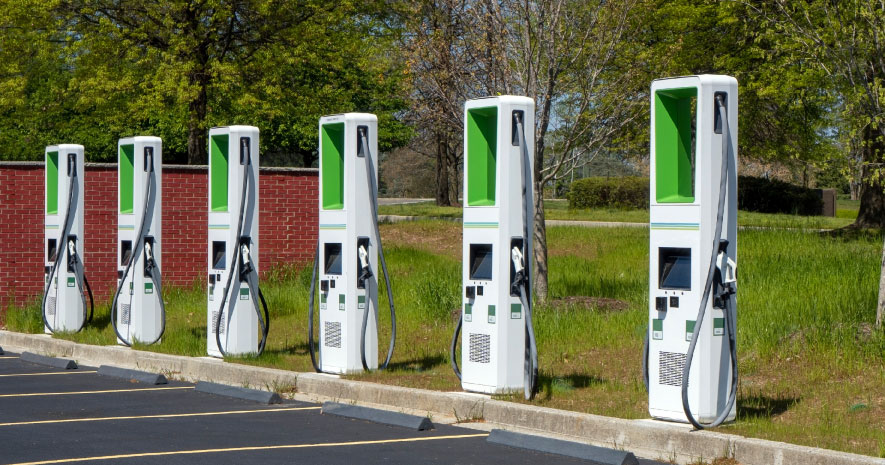
Argentina’s energy market is dominated by hybrid vehicles with fully electric vehicles. Its potential is significant, driven by the need to reduce dependence on imported fossil fuels, lower urban pollution, and leverage the energy advantages. Additionally, the increased investments in renewable energy sources like wind and solar may lead to the adoption of EVs in the country. Renewable energy can provide reliable, affordable, and green energy to the electric vehicle charging infrastructure. Integration into the grid also helps increase energy availability and reliability. This also demands grid modernization to handle the increased and concentrated load from EV charging stations. This may include strengthening transmission lines, smart grid implementation, and localized grid upgrades. Argentina also needs the modernization and installation of charging infrastructure in major areas. Preformed dead-ends help reinforce and upgrade the electrical distribution grid to handle new loads from EV charging stations.
Widespread adoption of EVs represents a new electrical load for the energy sector (usually 50 kW, 150 kW, and 350 kW). Existing distribution lines in rural areas are often not designed for such a load. Preformed dead-ends help deliver power needed to charge the electric vehicles. The dead-end is crucial for terminating the new high-tension lines securely on poles to ensure the structural integrity of the upgraded grid. A secure, reliable termination is crucial for the safety and uptime of the charging infrastructure hub. Formed wire dead-ends are able to absorb vibration and stress. They prevent conductor fatigue and breakage at the termination point. It is crucial for preventing downtime and ensuring safety. Formed wire dead-ends help deliver power needed for EV charging stations safely and reliably.
Functions of the preformed dead-ends in EV infrastructure
Reliable power distribution networks are crucial as Argentina scales up its electric vehicle market. Preformed dead-ends are crucial components in ensuring safe, efficient, and reliable electricity delivery to charging stations across the country. Formed wire dead-ends end overhead conductors securely on poles, towers, or substation structures. Their helical shape helps to grip the conductor evenly along its length to reduce stress and prevent damage. Here are the functions of the preformed dead-ends in EV infrastructure development in Argentina.

- Secure termination of conductors—conductors carrying electricity must be safely terminated at distribution poles and substations. Preformed dead-ends provide mechanical strength and electrical reliability to prevent conductor slippage.
- Stress reduction on conductors—formed wire dead-ends distribute load to enhance the longevity of power lines feeding EV chargers.
- Support for charging network expansion—preformed dead-ends enable new overhead line installations that link chargers to the grid.
- Enhanced safety and reliability – EV charging stations must deliver consistent power without interruptions. Formed wire dead-ends improve system reliability and safety for end users.
- Adaptability in diverse environments—preformed dead-ends are able to withstand environmental stresses like wind, ice, and heat to ensure durability across diverse climates.
- Integration with renewable power supply—formed wire dead-ends ease the safe connection of transmission and distribution lines from renewable plants to EV charging infrastructure. This aligns transport electrification with the country’s clean energy goals.
Significance of lithium in electric vehicles and their infrastructure in Argentina
Argentina is one of the major producers of lithium, which is a critical mineral for EV batteries. Lithium plays a crucial role in powering EVs and shaping the infrastructure supporting their adoption. Lithium-ion batteries dominate the EV industry due to their high energy density and fast charging capabilities. It enables EVs to achieve longer ranges, faster speeds, and more reliable performance. Lithium batteries are also crucial in charging stations and grid storage systems to ensure a stable electricity supply. Its importance is as discussed below.
- Battery manufacturing and local industry development—Argentina could reduce reliance on imports and support its own EV market growth.
- Integration with renewable energy—wind and solar power can integrate with lithium battery storage to create sustainable EV charging stations and improve grid stability.
- Infrastructure modernization—investing in charging networks powered by renewables, battery recycling facilities, and smart grids can help use lithium’s potential. This is also crucial in balancing supply and demand in the country.
- Policy leverage—Argentina’s lithium reserves provide geopolitical and economic leverage in international markets. This makes lithium critical for EVs and clean energy storage.