
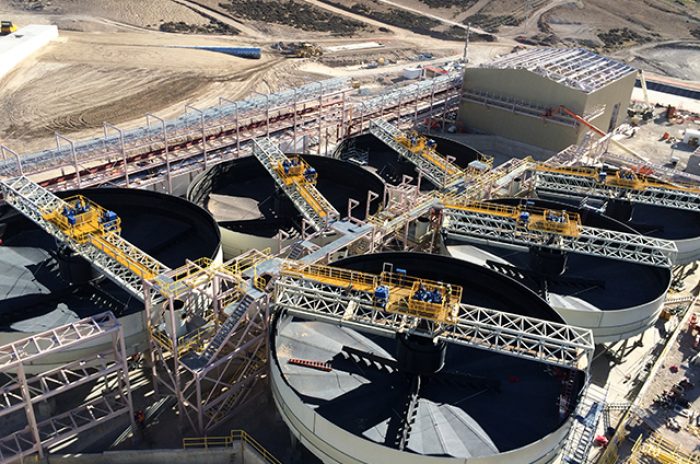
Argentina’s mining sector is shaped by abundant geological endowment, evolving regulatory frameworks, and global demand for critical minerals. The country is now emerging as a key player in South America’s extractive economy within lithium and copper markets. Argentina holds lithium reserves, copper deposits, gold and silver in provinces such as San Juan, Catamarca, and Salta. The availability of these minerals position Argentina as a long-term supplier to global markets. They are essential materials for electrification, renewable energy, and industrial manufacturing. These resources are attracting international mining companies, battery manufacturers, and investors. Investments are critical for infrastructure expansion including power supply, water management systems, and port access. These expansions and upgrades depend on power line hardware components such as one-bolt guy clamps.
The one bolt guy clamp is crucial for tensioning and anchoring the guy wire systems in the mining projects. Its design helps secure wire rope legs with a single, central bolt which makes it crucial for efficiency and reliability in harsh mining environments. The one bolt guy clamp holds two or more wire rope legs together using a single high-strength bolt and a matching saddle. The clamps anchor poles on soft ground to resist lateral forces from conductors and wind. One-bolt guy clamps address various challenges such as operating equipment in remote and harsh environments. It ensures the continuity and safety of mining operations from the lithium triangle to the mining projects of the Andes.
Technical specifications for the one-bolt guy clamps used in Argentina’s mining sector
One bolt guy clamps secure guy wires in power line, communications, and structural support systems tied to mining operations. They help stabilize poles, masts, communication towers, and similar structures. These in turn support power lines, conveyors, and light structural loads at mining sites. It creates a secure, mechanical connection between the strand and anchor without damaging the wire strand. The clamp body consists of high-strength carbon steel from hot-dip galvanization for corrosion resistance. Hot-dip galvanizing extends service life against weathering, moisture. And surface corrosion. This is crucial for mining environments exposed to dust, water spray, and wind. The clamps are designed to provide enough grip to maintain guy wire tension under expected load conditions.
Functions of single bolt guy clamp in Argentina’s mining infrastructure
One-bolt guy clamps are essential in the stabilization and reliability of surface-level systems that support mining operations. They also maintain the integrity of auxiliary structures that enable power distribution, communications, and site safety across mining projects. Here are the key functions of the one-bolt guy clamps in mining infrastructure.
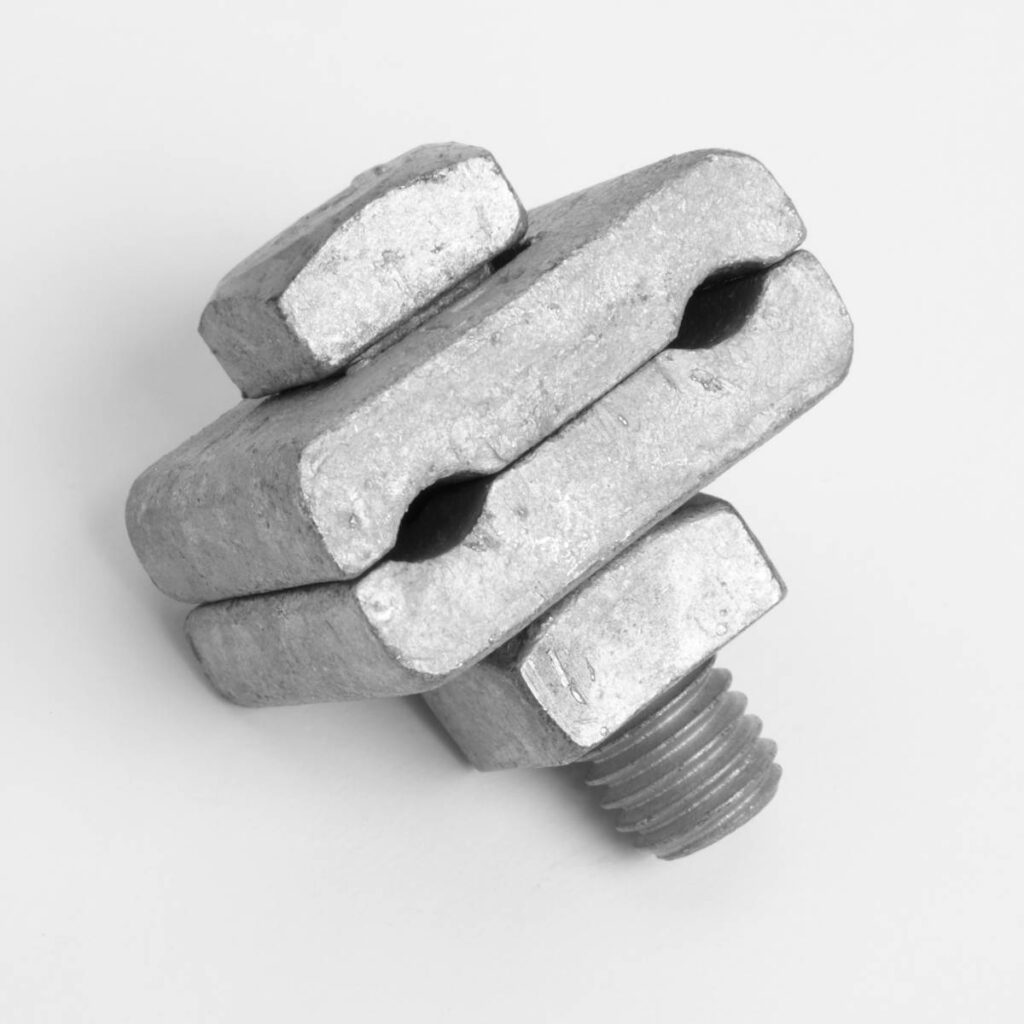
- Stabilization of surface structures—the one-bolt guy clamp secures guy wires to anchor rods or attachment points. The guy wires then stabilize poles, masts, lighting towers, and small lattice structures used in mining sites.
- Support for power and electrical infrastructure—single bolt guy clamps serve in guyed power poles and temporary transmission structures feeding substations, pumping stations, and processing facilities. They help ensure alignment and load balance of poles carrying electrical conductors to reduce the risk of outages.
- Load transfer and tension retention – the guy clamps transfer tensile load from the guy wire into the anchor system. Their grooved clamping surfaces distribute pressure along the wire, reduce slippage, and preserve strand integrity.
- Quick installation and adjustment – single bolt clamps allow fast installation, adjustment, and removal using basic tools. They support efficient construction and maintenance of temporary or semi-permanent structures. These serve during exploration, project development, and operational phases.
Infrastructure development requirements for Argentina’s mining sector
The scale, development, and competitiveness of mining growth depends on sustained investment in enabling infrastructure. The requirements span energy, transport, water, logistics, and digital systems. These systems must align with geographic and operational realities of Argentina’s mining regions. The key infrastructure developments include:
- Energy infrastructure and power reliability – the expansion of transmission lines, substations, and on-site power generation is critical for Argentina’s mining projects. Grid interconnection is essential to support large-scale processing facilities and copper operations.
- Transport and logistics networks – efficient transport infrastructure is crucial to moving heavy equipment, consumables, and mineral exports.
- Processing, storage and export facilities – processing plants, tailings storage facilities, and export terminals need careful planning and capital investment.
- Digital and communications infrastructure – modern mining operations depend on advanced digital systems for automation, monitoring, and safety management. Fiber optics and wireless networks support real-time data transmission, remote operations, and geotechnical monitoring.