
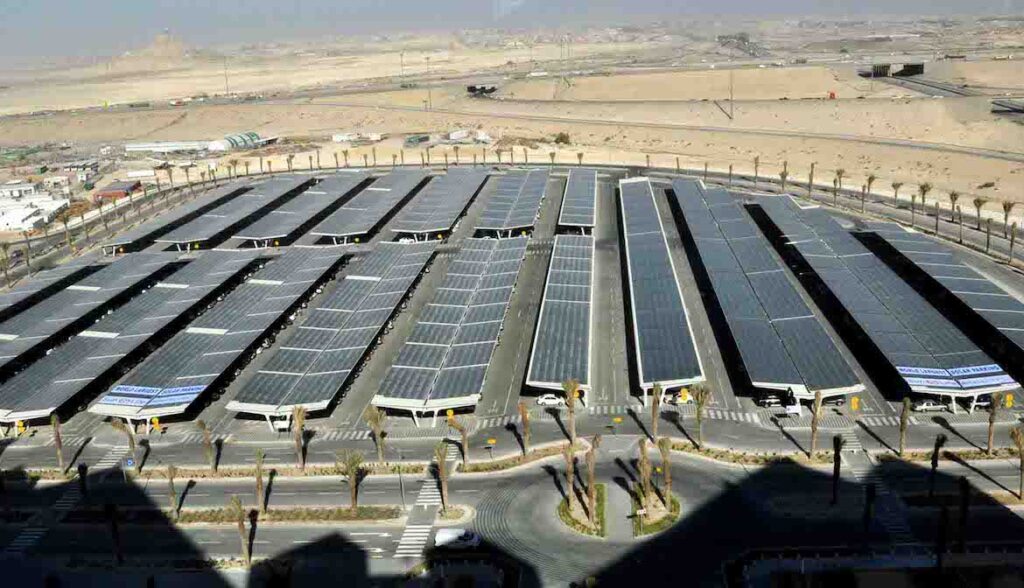
Arauco Solar Park in Argentina has begun operations following a significant construction achievement. The project finished its initial complete row of solar panels and initiated operational assembly tasks that will direct the development of Argentina’s largest wind and solar hybrid facility. The initiative encompasses the setup of the initial full line of photovoltaic PV panels. It also allows for on-location confirmation of the proper implementation of all essential components of the solar tracking systems. The construction process involves module installation, direct current electrical linkages, grounding systems, quality assurance, and adherence to safety standards. Upon completion, Arauco will include over 1,600 solar trackers and 94,000 PV panels, boasting an installed capacity of 50 MW. The initiative will include technologies such as grading activities, road building, solar tracking systems, and the enlargement of the transformer substation. These links use sophisticated elements like suspension insulators.
Suspension insulators support and electrically isolate live high-voltage conductors from grounded transmission towers. They mechanically support conductors while preventing current flow to the ground structure. Electrical insulator strings serve on step-up substation outgoing transmission lines connecting the solar park to the grid. They isolate the high-voltage conductors from the steel lattice towers carrying power from the solar plant’s main substation to the interconnection point. The insulators provide durable insulation for overhead collector circuits in arid terrain.
Technical specifications for the suspension insulators supporting solar parks
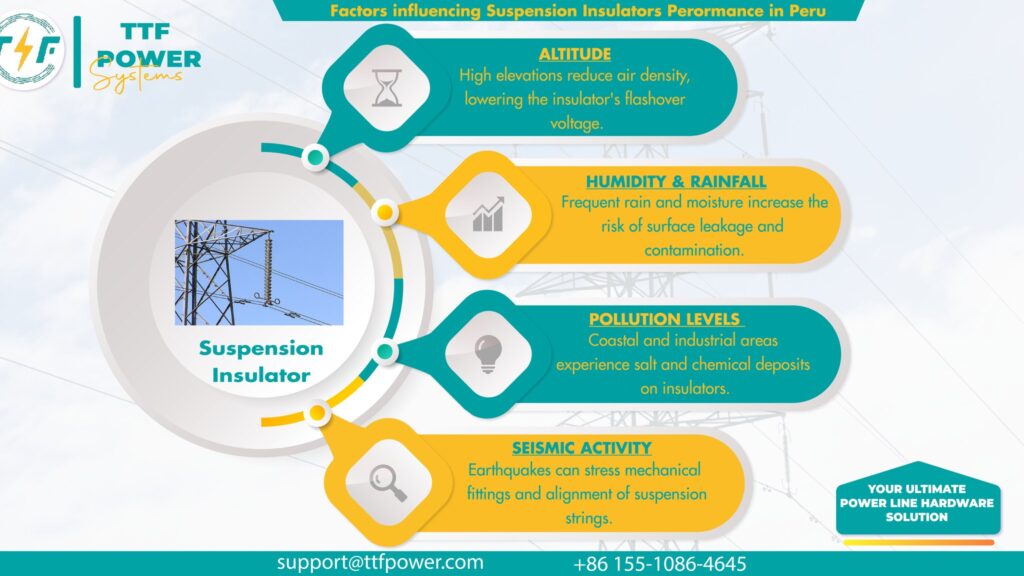
Suspension insulators support overhead conductors on towers or poles. They electrically isolate lines from grounded structures and maintain safety margins against flashovers. They work on medium- and high-voltage collection circuits, export transmission lines from solar parks to substations, and interconnection points with grid infrastructure. Their specifications must align with the system’s nominal operating voltage. Their mechanical specifications are tailored to terrain, wind loads, and conductor tension from design calculations. The common materials for the insulators include composite, porcelain, or glass. These insulators are manufactured to meet IEC and ANSI standards for grid applications.
Functions of the suspension insulators in solar park development in Argentina
Suspension insulators perform structural, electrical, and reliability functions in solar parks infrastructure. They ensure safe power evacuation from solar arrays to substations and the national grid. Suspension insulators protect against electrical faults, manage mechanical and environmental stress, and ensure stable power evacuation. Proper selection and deployment enhance the efficiency and longevity of solar energy projects. Here are the key functions of the suspension insulators in solar PV installations.
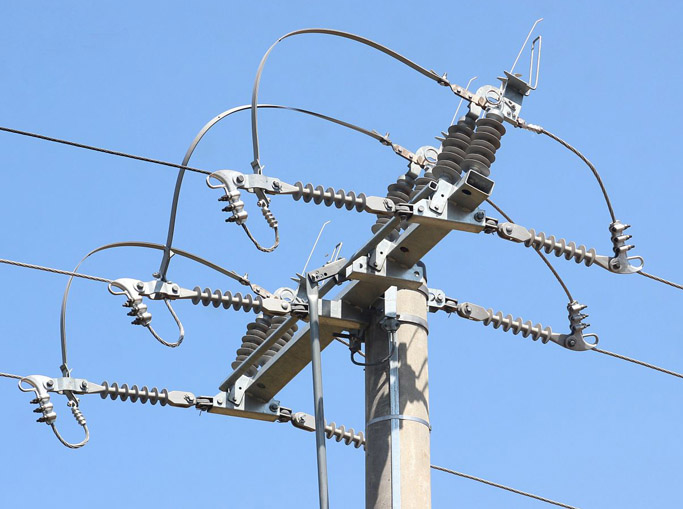
- Electrical insulation and system safety—suspension insulators electrically isolate live conductors from grounded support structures. They prevent current leakage and flashovers, protect maintenance equipment, and ensure compliance with grid safety standards.
- Mechanical support of overhead conductors—suspension insulators carry the mechanical load of overhead conductors. They support conductor weight, tension, and dynamic loads from wind and thermal expansion.
- Flexibility under environmental and thermal stress—suspension insulators allow controlled movement of conductors. The flexibility absorbs wind-induced oscillations and reduces mechanical stress on towers and conductors.
- Integration with line hardware and structures—suspension insulators act as interfaces between conductors and line hardware. They work with clevises, yokes, dampers, and spacers for vibration control. The integration ensures mechanical compatibility, ease of installation, and long-term structural reliability of solar transmission infrastructure.
Technologies facilitating the development of the Arauco solar park in Argentina
Multiple technologies ease the development of the Arauco solar park. The technologies guarantee effective building, dependable functioning, and incorporation with current renewable energy resources in the Arauco complex. These technological systems enhance long-term performance, strengthen operational resilience, and aid in Argentina’s shift towards renewable energy. These innovations encompass:
- PV generation and intelligent power electronics—the PV generation setup features high-efficiency panels and state-of-the-art inverters. These enhance yearly energy output and boost dependability for large-scale production and contractual obligations.
- Digital oversight and building technology—Arauco’s construction stage incorporates sophisticated digital monitoring systems. This encompasses immediate construction oversight, distant management, and data protocols. These lower risk, improve project clarity, and enable adherence to technical standards.
- Grid integration and substation improvements—Arauco is upgrading its transformer station by adding a new 60 MVA unit. This increases the voltage for effective transmission into SADI and guarantees stable grid integration for wind and solar energy.
- Hybridization with wind assets—the hybrid design of the Arauco complex incorporates system-level integration. It also includes complementary resource management alongside operational coordination systems. These systems lower variability and enhance the use of transmission infrastructure.