
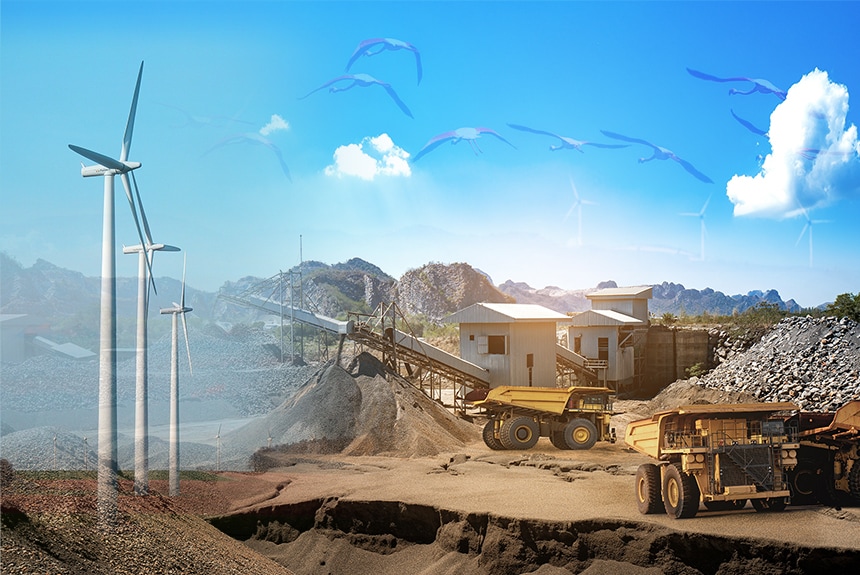
The continued growth of renewable energy in Peru is crucial for various operations in the country. Powering mining operations with renewable energy ensures uninterrupted clean power for factories and reduces reliance on diesel generators. This helps prevent structural failures and lower maintenance costs for energy-intensive industries like cement and metal processing. Peru is a leading producer of copper, silver, zinc, and gold. The shift arises from cost savings, decarbonization goals, and environmental, social, and governance pressures from global investors. Mines in the Andes depend on expensive diesel generators or grid power with volatile pricing. Solar, wind, and hydro provide stable, low-cost electricity to reduce operational expenses. Integration of solar, wind, and battery storage ensures uninterrupted mining operations in Peru. A ball clevis ensures the stability, safety, and efficiency of renewable energy infrastructure.
High-quality clevises play a crucial role in solar, wind, and transmission line installations that power remote mines. Ball clevises link solar panel mounting rails to ground screws or concrete foundations. They ensure stability in Peru’s seismic and high-wind regions. The clevises also allow adjustability for optimal solar panel tilt and improve energy yield in mountainous mining sites. Ball clevises function in guy wire assemblies for wind turbines and prevent tower sway in high-altitude mining areas. They also connect insulators to structures and ensure reliable power delivery from renewable plants to mining operations via high-voltage lines. Ball clevises reduce stress from wind-induced oscillations to prevent failures in critical power supply to mines. They have modular designs that speed up renewable project deployment in remote mining sites. There are innovative clevises with smart clevises with strain sensors and lightweight composite designs.
Delivering renewable energy to mining operations using the ball clevis
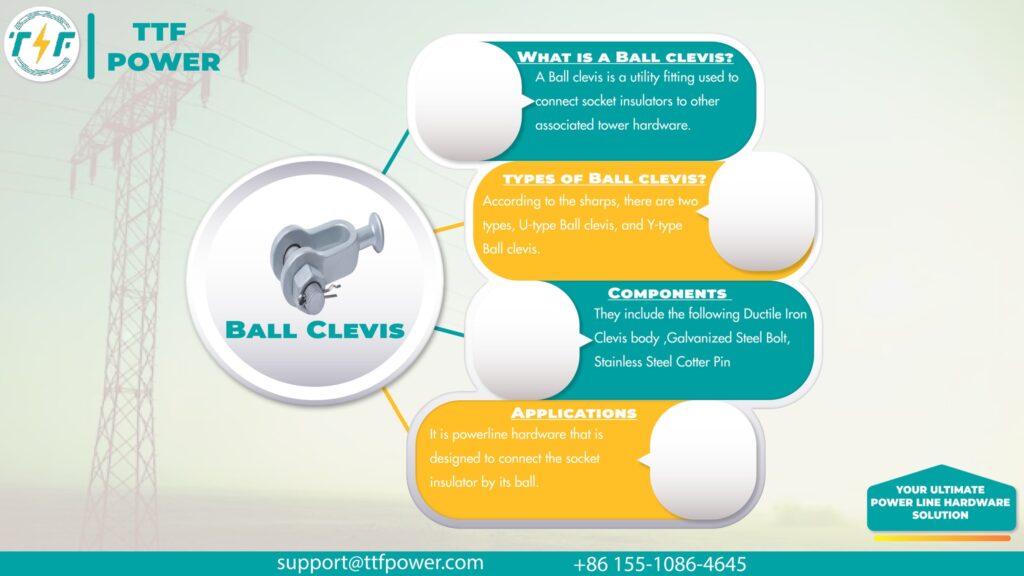
Ball clevises are crucial in the electromechanical infrastructure that delivers renewable energy to mining operations. They ensure the reliability of the transmission and distribution networks as Peru pushes to decarbonize the mining sector. Ball clevises ensure mechanical connections in high-voltage lines carrying clean electricity from renewable power plants to remote mining areas. A ball clevis is a metal fitting used in power line systems to allow rotational and angular flexibility. It also provides mechanical strength and stability while enabling some movement to prevent stress concentrations. Here are the roles of ball clevises in delivering clean energy to mining operations.
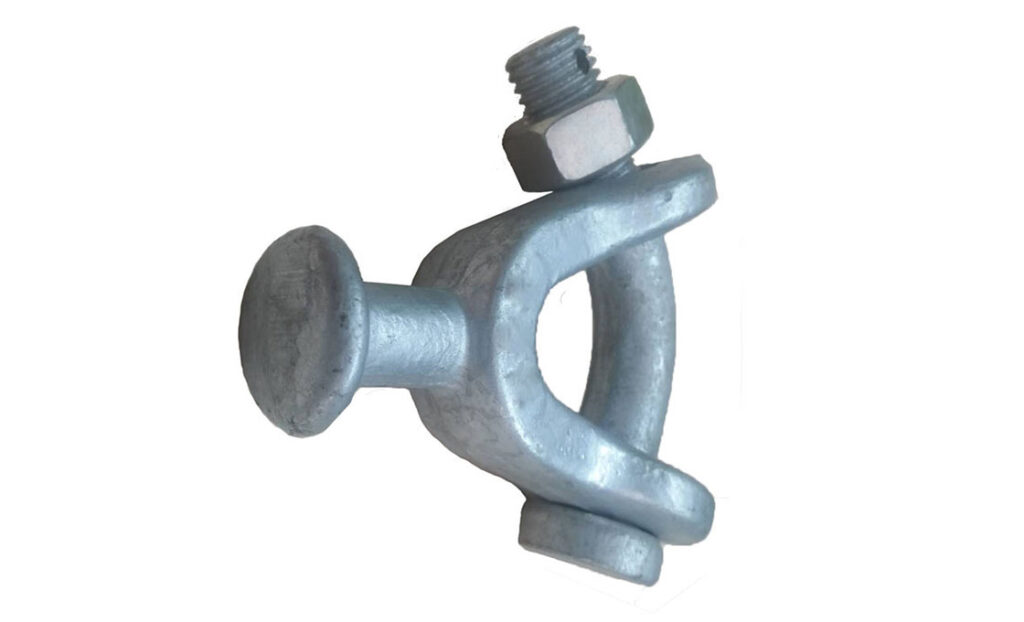
- Secure connection of insulators in renewable transmission lines—ball clevises link insulator strings to overhead conductors and tower arms. They allow insulators to bear both mechanical and electrical loads to help maintain alignment in high-tension environments.
- Load flexibility—the ball clevis provides angular mobility, which reduces strain on conductors and insulators, allows for smooth line movement, and prevents cracking, snapping, or snagging of high-voltage lines.
- Ensuring reliable power delivery to remote mining sites—ball clevises support the integrity of overhead infrastructure, bringing renewable energy to mining operations.
- Supporting grid resilience and expansion—ball clevises support fast, safe installations and upgrades. They enable new mining projects to be connected to clean energy sources efficiently.
- Enhancing safety and compliance—ball clevises meet standards for high mechanical strength, corrosion resistance, and electrical clearance and insulation support.
Technologies that deliver renewable power to mining operations in Peru
Using renewable energy to power mining operations demands a combination of generation technologies, transmission infrastructure, and grid integration systems. The technologies function reliably across the country’s rugged, remote, and high-altitude terrain. This demands technologies including:
- Utility-scale solar PV systems—solar PV panels are crucial for ground-mounted installations near mining zones. Power is then sent to mines through high-voltage lines or integrated into regional substations.
- Wind energy systems—utility-scale and mid-scale wind farms contribute to regional clean grids. Wind power stabilizes renewable supply in hybrid systems and supports clean energy delivery.
- Small hydro and run-of-river systems—small-scale hydroelectric systems provide baseload renewable energy for mining operations.
- Battery energy storage systems—solar, wind, and battery storage—are crucial for load balancing and frequency control, ensuring power availability, and reducing reliance on diesel generators.
- Hybrid microgrids—remote microgrids combine solar PV, wind, diesel backup, and battery storage. These systems are controlled by smart inverters and microgrid controllers and ensure uninterrupted power in isolated mining camps.
- High-voltage transmission lines—robust transmission networks delivering power—have galvanized steel towers, suspension clamps, ball clevis, stay rods, and yoke plates for mechanical strength.