
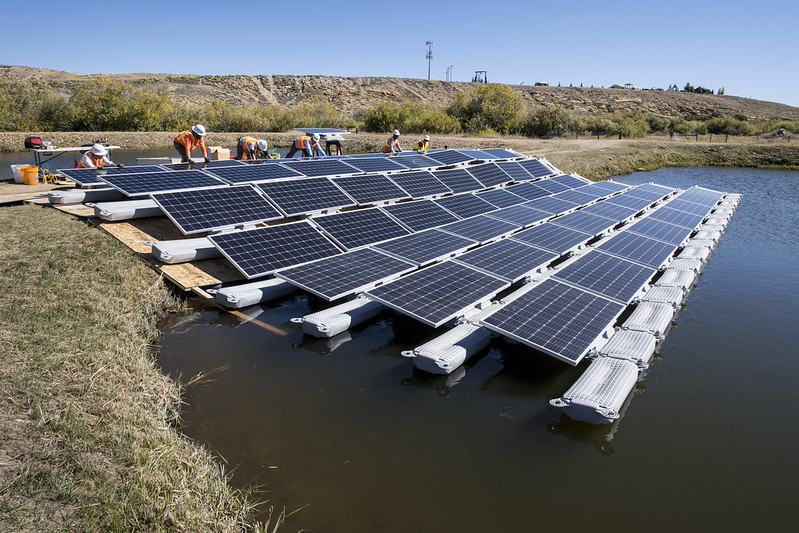
Argentina’s solar PV expansion features 7,980 MW of installed renewables and reflects a market that has achieved operational credibility within the region. The growth was catalyzed by structured procurement mechanisms. This resulted in a pipeline of operational assets that now show bankable performance histories, provide data-backed yield and reliability benchmarks, and enable refinancing and refinancing and secondary market transactions. The transition allows global manufacturers to scale their exposure with reduced uncertainty. The 8GW renewable capacity base is supported by structural factors such as resource advantage, demand-side pull, and cost compression. This diversification reduces reliance on sovereign-backed schemes and aligns the market with global solar investment trends. Argentina’s solar PV trajectory is now characterized by selective scaling, greater emphasis on performance optimization and asset efficiency, and integration of storage and grid-support technologies. Using compression terminals helps create permanent and high-intensity electrical connections in cabling networks of solar PV plants.
Compression terminals serve in junction boxes, combiner boxes, inverters, and battery banks. They establish a low-resistance pathway for safe and efficient power transmission. The terminals maximize system efficiency by reducing power loss as heat. Compression terminals provide a strong vibration-resistance physical connection that withstands tension and environmental stress. They prevent cable pull-out and ensure long-term reliability in outdoor conditions. Compression terminals use mechanical crimping to create their connection. It uses a specialized hydraulic crimping tool with matched dies and compresses the terminal’s barrel around the bare wire. The compression terminals contain high-current terminals designed to accept large compression lugs on both the input and output sides. The terminals provide robust, low-resistance connections needed between batteries.
Quality assurance for compression terminals used in solar PV plants
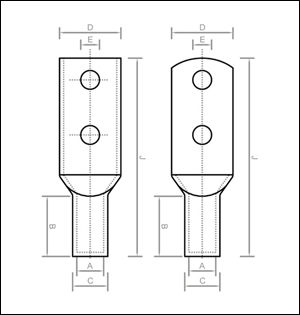
Quality assurance for compression terminals in solar PV plants is a control point for both electrical integrity and fire risk mitigation. The terminals terminate DC strings, inverter inputs, and grounding conductors. They sustain stable, low-resistance connections over thermal cycling, UV exposure, and load variation conditions. Quality assurance goes through design validation, material control, process control, and field verification. Compression terminals must deliver stable contact resistance, mechanical retention strength, thermal stability, and corrosion resistance. The protocols confirm these properties under worst-case operating conditions. During material selection, the materials undergo chemical composition verification, conductivity testing, and plating thickness measurement. It also includes design and type testing, crimping process control, electrical performance verification, and environmental durability. Quality assurance for compression terminals affects energy efficiency, system safety, and operational stability.
The functions of the compression terminals in Argentina’s solar PV plants
Compression terminals in solar PV plants ensure electrical continuity, thermal stability, and fault resilience across DC and AC selections of the plant. Their performance influences efficiency, safety, and long-term reliability. Compression terminals enable efficient and stable current transfer, provide mechanical security for conductors, and integrate grounding and safety systems. Here are the functions of the compression terminals in Argentina’s solar PV plants.

- Electrical conduction and current transfer – the terminals create a low-resistance electrical interface between conductors and equipment. They reduce contact resistance, reduce losses, and prevent localized heating.
- Mechanical retention and cable integrity – compression terminals provide mechanical anchoring of conductors. They prevent pull-out under tension, maintain conductor strand integrity, and ensure stable connections under thermal expansion and contraction.
- Thermal management at connection points – the terminals distribute current across conductor strands, prevent micro-gaps, and maintain stable performance under high ambient temperatures.
- Integration into grounding and bonding systems—compression terminals end grounding conductors to ground rods and grids. They ensure grounding paths remain low impedance for safety and equipment protection.
The technology and new market challenges in Argentina’s solar PV plant
Argentina’s solar PV is entering a technologically advanced and operationally constrained phase. The expansion is shaped by system complexity, performance expectations, and structural market risks. These interactions define the opportunities and the emerging challenges. These challenges include:
- Technology evolution driving the market – the market is adopting next-generation PV technologies with high-power modules, performance ratios, and module cost reductions.
- Tracker systems and AI-enabled control – single-axis trackers offer integration of AI-driven control systems to optimize positioning and protect against extreme weather.
- Digitalization and performance analytics—Argentina’s solar plants are data-centric assets such as SCADA systems with real-time monitoring, predictive maintenance models, and performance benchmarking.
- Solar and storage hybridization—battery integration is emerging as a critical technology layer through falling battery costs and hybrid PV and storage systems improving dispatchability and revenue stacking.