
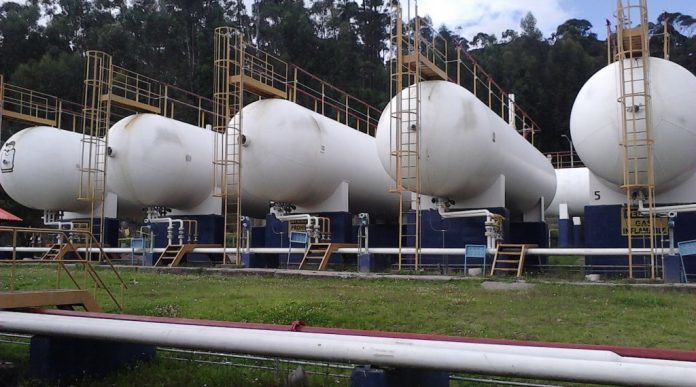
Argentina’s liquefied petroleum gas (LPG) production and processing facility that positions the country within the national energy sector. It helps bridge upstream hydrocarbon development with domestic energy security and export-led growth. LPG production expansion in Argentina leads to higher volumes of propane and butane recovered from raw gas streams. This links LPG growth to upstream drilling activity and productivity gains. Recent market-oriented reforms have improved price signals to allow producers to optimize output and invest in capacity expansions. This leads to modernization of processing facilities that has increased recovery efficiency, improved product quality, and reduced operational losses. There is also increased investment in fractionation capacity that ensure that incremental volumes can be monetized rather than constrained. It also leads to infrastructure for integrating with refining operations to enhance supply resilience and allows operators to respond to market fluctuations. This demands the use of a drop wire clamps.
Quality drop clamps enhance the safe and reliable distribution of electrical power in Argentina’s LPG infrastructure. The clamp mechanically supports, connect, and end electrical cables running between poles, structures, and buildings. LPG facilities rely on electrical power that must be distributed from main substations to pump stations, compressor stations, control buildings, and lighting poles. Drop wire clamps provide the secure and insulated connection points for the cables that feed the remote loads.
The clamps also secure instrumentation bundles and communication cables carrying signals for process control, safety systems, and communications. They can take the mechanical tension off the electrical termination points. This prevents wires from pulling loose which could cause shorts, arcs, and power loss. Compressors and pumps generate vibration where the clamp isolated the cable from vibration and prevent fatigue failure at the connection.
Drop wire clamps in Argentina’s LPG production and processing infrastructure
Drop wire clamps perform mechanical and safety functions within electrical and control systems. They support production, processing, storage, and export operations. The clamps are crucial for maintaining reliable power distribution and instrumentation integrity across energy facilities. Drop wire clamps secure electrical and control conductors to enhance safety in harsh environments. They contribute to electrical reliability and operational integrity for efficient LPG production, processing, and export operations. Here are the functions of the drop wire clamps in LPG infrastructure.
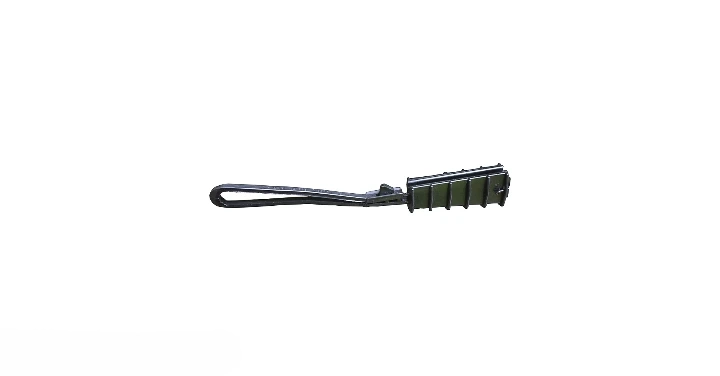
- Securing service and control conductors – drop wire clamps anchor and strain low-voltage service wires, control cables, and auxiliary conductors to structural elements. They ensure that electrical and control lines supply compressors, pumps, metering systems, and safety devices remain tensioned and positioned.
- Strain relief and mechanical load management – drop wire clamps provide effective strain relief by transferring tensile loads from conductors to structural supports. They prevent excessive stress on cable terminations and connectors to reduce risk of conductor fatigue and breakage.
- Support for infrastructure expansion and modular construction – modular plant design and rapid deployment are common as Argentina expands LPG processing capacity. Drop wire clamps enable quick, secure installation of temporary and permanent service connections during construction and expansion phases.
- Protection of electrical and instrumentation systems – drop wire clamps help maintain consistent cable alignment and spacing to reduce movement that could lead to signal interference.
Role of liberalization in reshaping Argentina’s energy economics
Liberalization is reshaping Argentina’s energy economics by changing price formation, investment behavior, and the structure of energy markets. The transition toward market-based mechanisms align incentives across the oil, gas, power, and fuels sectors. Drop wire clamps support the transition by anchoring service and control conductors that power pumps, compressors, and metering systems. Here is how liberalization impacts Argentina’s energy economics.
- Transition from controlled pricing to market signals – liberalization has reduced price controls and subsidies to allow prices to better reflect production costs and exchange rates. It enables energy companies to justify investments in upstream development, processing, and infrastructure.
- Interaction with the energy transition – liberalization is also reshaping how Argentina approaches the energy transition. Market frameworks bring about investment tin renewable energy where private financing drives cost reductions.
- Impact on energy efficiency and demand behavior – cost-reflective pricing influences consumer and industrial behavior by promoting energy efficiency and rational demand. Price transparency encourages investment in efficiency upgrades, fuel switching, and demand management across industrial sectors.
- Strengthening export-led growth – liberalization of exports allows producers to monetize surplus output and respond to international demand.