
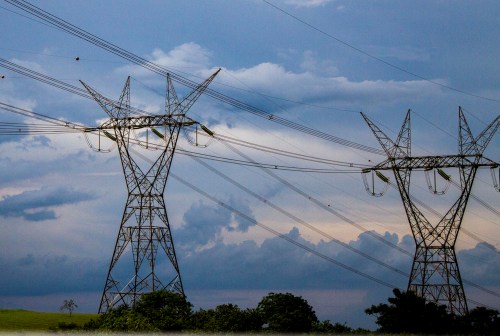
Pata Mora has completed executive projects and is now entering a decisive execution phase that intersects with Argentina’s energy sector strategy. It has commenced the infrastructure works, including access roads, energy supply, and essential services. This positions the hub to operate as a logistics and operational structure. This is crucial for mining, hydrocarbons, and energy-intensive industries. The access roads will enable the transport of oversized equipment like turbines, transformers, drilling rigs, and pressure vessels. The electrical infrastructure, including substations and grid interconnections, supports early-stage operations and later expansions. This ensures reliable power for processing facilities. The development of utilities and services allows continuous industrial activity for upstream oil and gas operations and renewable project construction. Formed wire deadends ensure reliability and expansion of the national grid. They are crucial for integrating new energy sources.
Performed deadends anchor conductors at termination points on transmission towers, substation structures, and distribution poles. They prevent conductors from pulling loose to ensure the physical stability of the entire transmission line. This helps reduce the risk of failures and outages in Argentina’s energy infrastructure. Formed wire deadends reduce maintenance costs and unplanned outages to ensure transmission lines remain operational. This development strengthens Argentina’s energy value chains by localizing logistics, reducing transport costs and improving operational resilience.
Dead ends provide reliable and standardized termination points that are consistent to install compared to compression fittings. Using the dead ends speeds up construction, ensures quality, and guarantees the long-term performance of new lines. The Pata Mora initiative can adopt the formed wire deadends to ensure a safe and secure point for crews to attach grounding equipment and tensioning devices during construction and maintenance.
Energy infrastructure development leading to energy security and industrial scalability
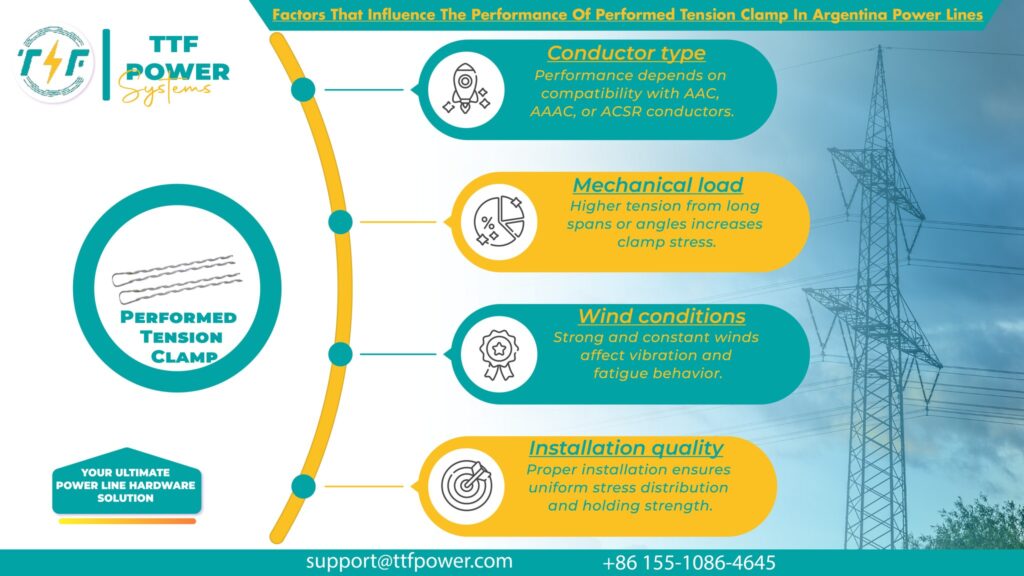
Energy infrastructure development is an essential mechanism that strengthens energy security. Robust infrastructure such as formed wire deadends supports the system and ensures reliability, resilience, and expansion capacity. They form a structural foundation for sustainable industrial growth to ensure that expanding economic activity is supported by a secure, adaptable, and future-ready energy system.
Formed wire deadends in Argentina’s energy infrastructure
Formed wire deadends provide mechanical and operational support for transmission and distribution networks. They ensure line stability, safety, and long-term performance. This is crucial as Argentina expands high-voltage grids, integrates renewables, and reinforces regional energy lines. Here are the functions of the formed wire deadends in energy infrastructure development.

- Mechanical anchoring of conductors—formed wire deadends secure conductors at termination points. They transfer tensile loads from the conductor to the supporting structure. Deadends provide full mechanical holding strength exceeding the rated tensile strength of the conductor.
- Load distribution and stress management—formed wire deadends distribute stress along the conductor surface through preformed helical wires. They reduce conductor damage to extend the service life of transmission and distribution assets.
- Support for high-voltage transmission expansion—the expansion of transmission lines depends on robust dead-end hardware. The formed wire deadends work at angle towers, terminal structures, river crossings, and substation entries.
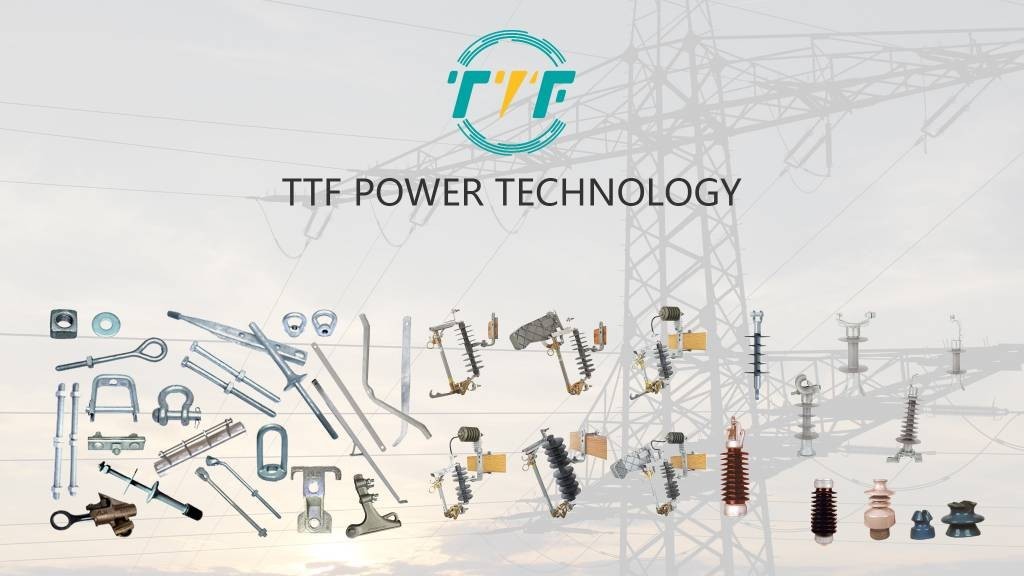
- Compatibility with modern grid hardware—formed wire deadends integrate with other line components. They work with insulator strings, clevises, shackles, and yoke plates. The compatibility ensures mechanical continuity across the line to support stable power flow.
Impacts of infrastructure expansion for investment and regional energy development in Argentina
Infrastructure expansion acts as a catalyst for investment and regional energy development in Argentina. It shapes flow of capital, project advancement, and the transition from resource potential to productive reality. The expansion of transport, energy, and logistics infrastructure shapes the geography of Argentina’s future energy economy. Discussed below are impacts of infrastructure expansion.
- Reducing structural barriers to energy investment—infrastructure expansion catalyzes investment by reducing project risk and upfront costs. The infrastructure reduces transportation time and allows energy projects to secure evacuation capacity.
- Creating investment clusters and energy hubs—energy projects attract equipment suppliers, maintenance contractors, engineering firms, and logistics providers. Shared infrastructure reduces unit costs, which makes extra projects more attractive.
- Strengthening energy security and system reliability—increased reliability enhances confidence among long-term investors. Infrastructure development reduces transmission line outages, and modernized substations and digital grid management improve reliability. Formed wire deadends secure and connect the infrastructure for reduced outages and interruptions.
- Enabling industrialization and value addition—energy infrastructure expansion enables downstream industrial development. This is vital for reshaping regional productive matrices and reduces dependence on centralized economic hubs.