
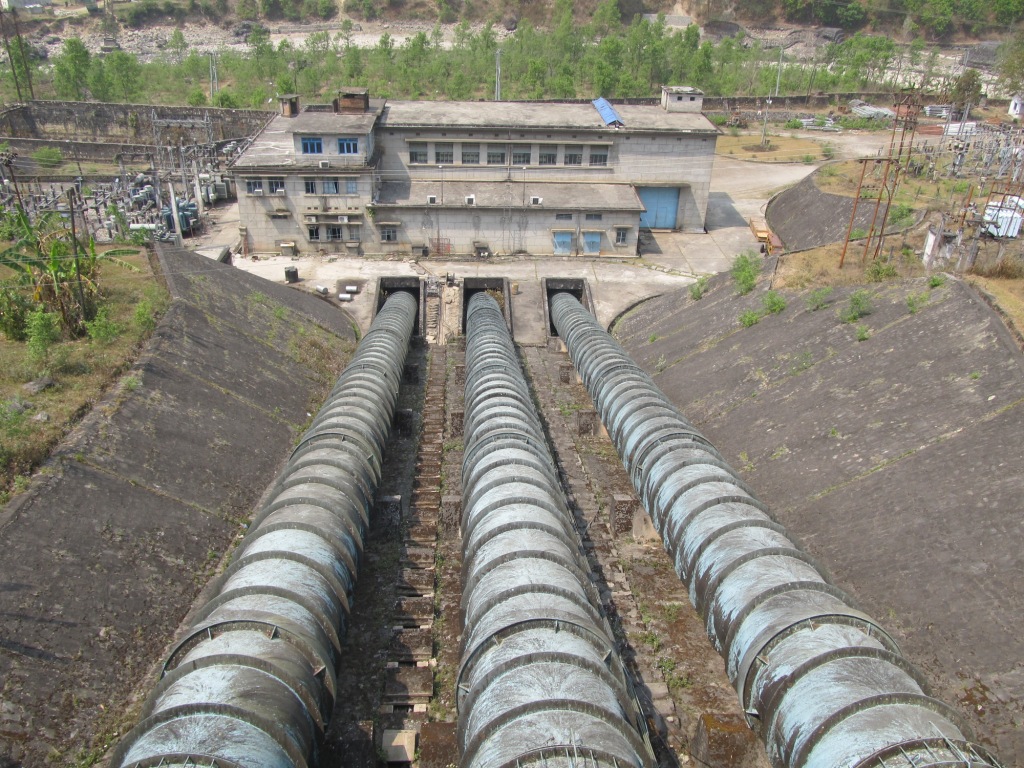
The ClearPower Global project at Peru’s Tinajones water system shows how existing irrigation infrastructure can become an energy-generation asset. The project was authorized by the Olmos Tinajones Special Project (PEOT). ClearPower is planning about 20 MW of hydropower capacity, up to 184 GWh of annual generation, and about US$30 million in investment. The company has modular turbines designed to operate within gravity-fed and pressurized water infrastructure. This is essential to Peru because irrigation systems transport enough volumes of water across elevation differences. Its current technology portfolio includes modular configurations designed for different combinations of head, flow, and conduit conditions. The Tinajones project shows a shift toward extracting extra value from existing infrastructure. Peru can also examine opportunities within irrigation canals, pipelines, water conveyance systems, and other hydraulic assets. These installations will create demand for electrical infrastructure equipment, including guy deadends, connectors, insulators, and line hardware.
High-quality guy dead-ends anchor guy wires that counteract the tension and lateral forces placed on poles and structures. It terminated a guy wire and transferred its mechanical load to a structure. Guy wires counteract forces that would cause a pole to break. The deadend hardware at the end of the guy wire grips the wire and connects it to an anchor. This connection holds the rated breaking strength of the guy wire itself. The guy deadends consist of helically performed rods that wrap around the guy strand. Preformed deadends must be sized correctly for the wire and installed with the correct lay direction. The deadends secure the structures that support heavy equipment like turbines or cranes during installation and maintenance. This is crucial for power generated at hydroelectric dams to be transmitted to consumers through the grid.
Quality assurance for guy deadends used in hydropower and turbine infrastructure
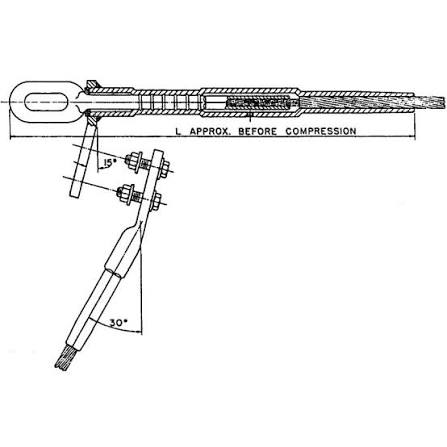
Guy deadends terminate and anchor guy wires that stabilize poles, towers, and other structures. Their quality affects the mechanical stability of supporting structures around transmission connections, substations, utility poles, and auxiliary electrical networks. Quality assurance should address the material, mechanical strength, corrosion resistance, dimensional accuracy, and manufacturing consistency. The process covers material verification, mechanical-strength testing, dimensional accuracy, load-transfer performance, corrosion protection, and compatibility with guy wires and anchoring systems. During manufacturing, QA addresses the casting and forging process. It checks for cracks, surface defects, inclusions, deformation, incorrect forming, sharp edges, and incomplete galvanizing. Hydropower generation needs electrical interconnections with transmission or distribution networks. The guy deadends help maintain the mechanical stability of these structures by terminating the guy wire.
The importance of guy deadends in hydropower and turbine infrastructure
Guy deadends terminate and secure guy wires to poles, towers, anchors, and other supporting structures. They help maintain the mechanical stability of the structure carrying electrical equipment and conductors. Here are the key roles of the guy deadends in hydropower and turbine technologies in Peru.

- Securing guy wires to support structures—the guy deadend provides a secure termination for a guy wire. The guy wire transfers structural loads from a pole to an anchor point while the deadend maintains the mechanical connection.
- Stabilizing poles and towers—hydropower plants connect to electrical networks through conductors, substations, transformers, and transmission lines. Guy deadends help maintain the tension in guy wires that stabilize poles and other structures against the forces.
- Supporting power evacuation infrastructure—electricity produced by a hydropower plant needs power evacuation infrastructure that includes overhead lines and supporting structures that need mechanical stabilization. Guy deadends contribute to the reliability of the infrastructure between the hydropower generator, transformer, and substation.
- Maintaining structural alignment—the guy deadend keeps the guy wire connected to its anchoring system. This helps maintain structural alignment to preserve the intended geometry of the overhead line
Hydropower supporting Peru’s renewable energy diversification
Hydropower projects in Peru diversify electricity generation because they provide a renewable, established generation source that can complement the country’s developing solar and wind resources. Peru’s water infrastructure provides opportunities to expand hydropower while reducing reliance on a narrower group of generation technologies. A more diverse portfolio can help the electricity system manage variations in resource availability. Hydropower can provide a different profile where reservoirs or managed water flows are available. Additionally, hydropower projects can capture the energy related to water flow and elevation differences. It converts hydraulic energy into mechanical energy through turbines and then into electricity through generators. New generation facilities also need investments in transmission lines, substations, transformers, protection equipment, and grid connections.