
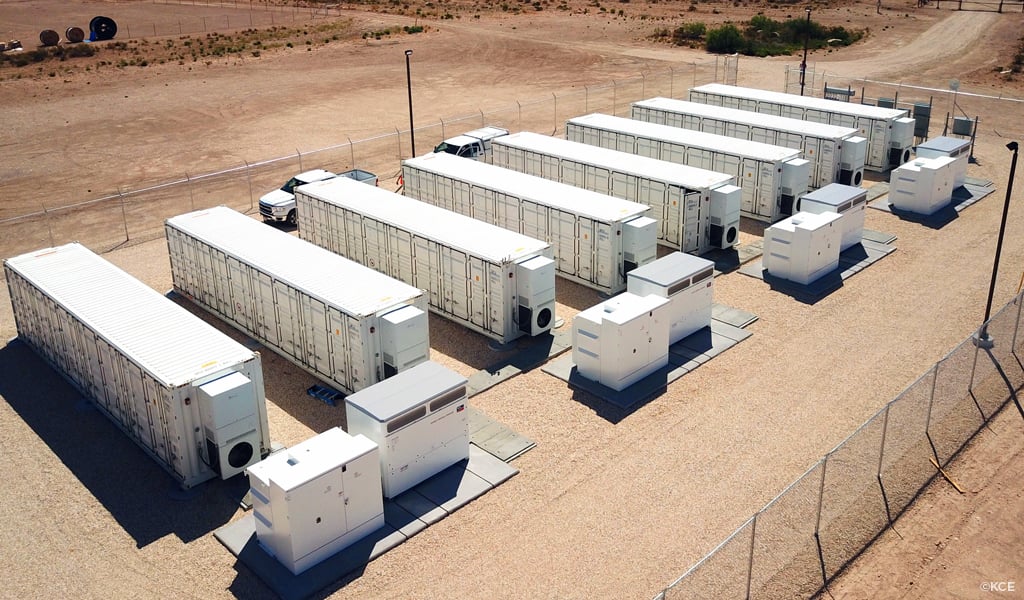
Argentine Central Puerto, the largest power generator, has moved from thermal plants to grid-scale batteries and renewables. The company recently signed a mandate letter with the International Finance Corporation (IFC) for potential financing of up to $300 million to advance its renewable investment plan. This includes the first utility-scale battery energy storage projects awarded under the AlmaGBA tender. Large-duration BESS can supply sustained power during evening peaks and bridge shortfalls when wind and solar dip. The project lowers the need for expensive thermal ramping and emergency spot market purchases. BESS improves the capacity factor and integration of renewables to enable more predictable dispatch. The project can also capture revenues from capacity payments, ancillary services, and energy arbitrage. IFC’s mandate letter signals international development bank confidence. Power line hardware components, such as insulator pins, are crucial for safety, reliability, and system integrity for BESS projects.
Electrical insulator pins separate and electrically isolate the live, high-voltage conductors from the grounded support structures. They must bear the significant weight of the conductors and the mechanical loads such as wind, ice, and tension. The BESS project includes an interconnection substation and transmission lines to connect the battery system to the grid. They serve within high-voltage switchyards and on the supporting structures of the connection lines. The insulator pin prevents a ground fault or a short circuit to earth, protecting the personnel from electrocution and preventing uncontrolled energy discharge. The pin ensures physical and electrical integrity of the transmission circuit connecting the BESS to the grid. Composite insulators have hydrophobic surfaces that prevent flashovers. The galvanized steel metal pin within the insulator prevents rust and degradation, which could weaken the mechanical support.
Importance of insulator pins in BESS projects
An insulator pin is a small, low-cost piece of hardware with outsized importance for the safety, reliability, and longevity of medium- and high-voltage interconnections at battery energy storage sites. Insulator pins perform mechanical and electrical functions, protecting equipment, personnel, and the grid connection. In a BESS yard, insulator pins mount on medium- and high-voltage transformer bushings, crossarms, distribution-style interconnection points, and earthing assemblies. It is crucial to follow best practices and the manufacturer’s recommendations to ensure reliability. Here are the functions of the insulator pins in BESS yards.
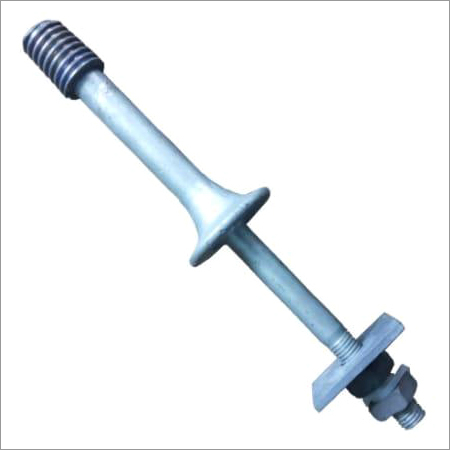
- Electrical insulation—the insulator pin isolates conductors from grounded structures to prevent flashovers and leakage paths.
- Mechanical support—the pin secures overhead conductors, jumpers, and bushings that carry tensile and bending loads while maintaining clearance and sag.
- Creepage and surge protection—the insulator’s shape and material create the necessary creepage distance to resist surface tracking. It helps withstand switching and lightning surges when paired with surge arresters.
- Reliable connection point for protection and control wiring—insulator pins support communication runs, earthing leads, and bonding straps for protection schemes around transformers and inverters.
- Safety barrier for maintenance crews—insulator pins maintain clearance and prevent energized parts from contacting grounded structures. It reduces risk during commissioning and routine maintenance.
- Standardized replacement and inspection interface—pins allow quick replacement of damaged insulator elements without major structural rework. This is crucial to reduce downtime at commercial BESS sites
Technological innovations driving Central Puerto’s BESS projects in Argentina
Argentina’s power sector is leading the charge with its first large-scale battery energy storage system projects under the AlmaGBA program. The project depends on several technological innovations that make large-scale energy storage reliable, efficient, and bankable. These technologies include:
- Advanced battery chemistries for grid-scale storage—Central Puerto’s projects can use lithium-ion batteries for high cycle life, thermal stability, and safety. Innovations in battery cell design enable discharge that allows the projects to supply power during evening peaks.
- Smart inverters and power conversion systems—this includes bi-directional inverters, grid-forming capabilities, and black-start functions.
- Modular and scalable containerized designs—this includes battery racks, cooling, and fire suppression that reduce on-site construction risks. Scalability allows Central Puerto to expand capacity in stages as demand for flexibility grows.
- Digital energy management and AI integration – this includes battery management systems, AI-driven dispatch optimization, and SCADA integration. This allows monitoring of temperature and ensures smooth coordination between BESS, thermal plants, and renewable assets.
- Thermal management and safety—the use of liquid cooling systems improves heat dissipation in Argentina’s varied climates. Advanced fire suppression technologies, including clean-agent systems and automated detection, to reduce fire risk at large battery yards.