
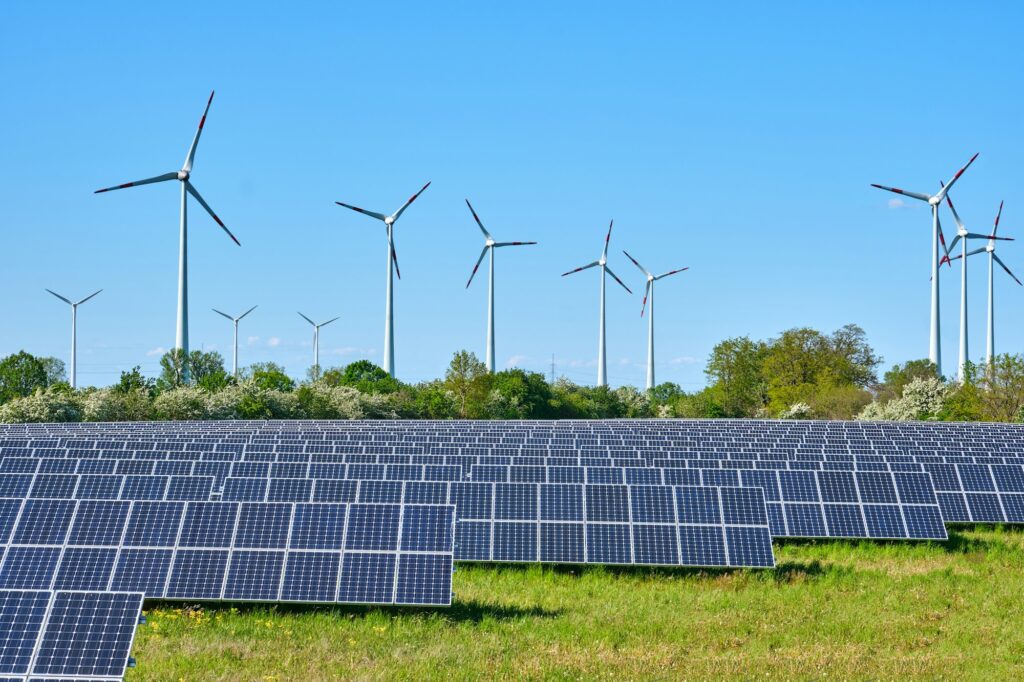
Bolivia has been adopting strategies and various measures to integrate the increasing renewable energy capacity into the national grid. These efforts arise from regulatory, technical, financial, and institutional fronts. These measures include rural electrification and grid extension, ENDE’s investments and transmission line projects, remote monitoring tools, hybrid systems, and energy mix and targets. Adopting these measures helps reduce reliance on diesel generation in isolated systems, encourages the development of decentralized renewable capacity, alleviates transmission bottlenecks, and enhances operational reliability. By adopting these measures, Bolivia can witness improved energy access, reduced fossil fuel dependence, stronger grid resilience, economic development, and an increase in investments. Several projects are supporting Bolivia’s grid upgrade, including solar and wind projects in the Uyuni region, the INEA transmission system, BESS projects, and National Control Center Modernization. No wrench screw anchors provides a fast and non-disruptive way to add support to the existing grid.
Bolivia’s renewable resources are in remote areas with difficult access, which may limit the transportation of heavy drilling rigs. A no-wrench screw anchor is a steel pile with a helical bearing plate that is mechanically screwed into the ground using hydraulic attachments on excavators. It does not need manual labor with wrenches or post-hole digging. The country needs new transmission lines to connect new solar and wind farms in remote areas to the grid. No-wrench screw anchors speed up the pace of grid expansion to meet renewable integration timelines. The screw anchors prevent soil erosion as they are mostly manual. Their helical design provides tensile or pull-out resistance. This helps them hold down transmission towers, solar panel mounting structures, and perimeter fencing for substations.
Core functions of no wrench screw anchors in Bolivia’s grid upgrades and renewable integration
No wrench screw anchors are helical earth anchors with a forged eye that screws into the ground. They can be installed by hand using a turning bar or with power adapters. The screw anchors support guyed utility poles, anchor small foundations, and secure secondary equipment. Using the anchors helps cut costs and deliver durable, reliable anchoring for renewable-era networks. Here are the functions of the no-wrench screw anchor in grid upgrades and renewable integration in Bolivia.
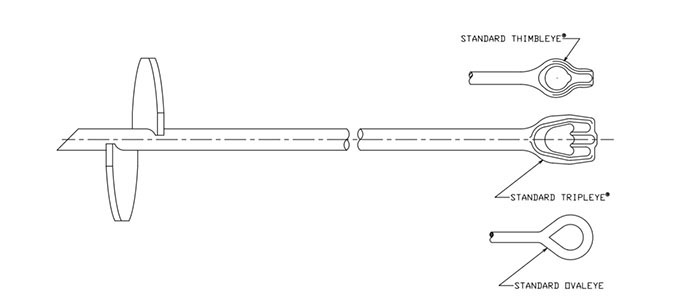
- Anchor utility poles and guy wires—the anchors provide the lateral holding capacity needed to stabilize poles carrying lines from new solar or wind farm export lines.
- Speed up deployment—no wrench screw anchors can be installed by hand without large excavation or concrete footings. This makes them ideal for rapid rollouts of line extensions, microgrid poles, and small substations in Bolivia.
- Reduce environmental disturbance and footprint—their easy-to-install features are crucial in sensitive high-altitude areas. This protects greener construction for renewable projects.
- Provide load capacity—proper selection of the no-wrench screw anchors delivers predictable holding strength for guy loads used on poles.
- Easy maintenance of existing networks—screw anchors allow retrofit guying or replacement of failed anchors without long outages.
Challenges facing Bolivia’s grid upgrades for renewable integration
Bolivia has strong renewable potential, including solar, wind, and hydro resources, and a growing political will. Turning this capacity into reliable, affordable power needs overcoming interlinked challenges across technical, financial, geographical, and social dimensions. These challenges are as discussed below.
- Intermittency and system flexibility gaps—solar and wind output vary by season. Bolivia’s grid lacks enough fast-responding flexibility. This may include storage, flexible generation, and thermal demand response.
- Insufficient energy storage and lack of ancillary-service markets—the country has little installed storage and few markets. This limits renewable energy dispatch from remote production areas to major consumption areas.
- Transmission bottlenecks—most solar and wind projects are in remote areas like Altiplano, Tarija, and Potosi. This may result in congestion, high losses, project delays, and stranded resources. Bolivia may address this by producing prioritized grid expansion plans and using HV lines.
- Aging distribution network—distribution systems in the country were designed for one-way power flow. Increasing rooftop PV and mini-grids creates reverse flows and protection coordination issues.
- Cybersecurity and data management risks—modern grids depend on digital control and communications. Most utilities are still developing cyber defense and data governance. Lack of management may lead to operational risks from cyberattacks, data breaches, or failures.