
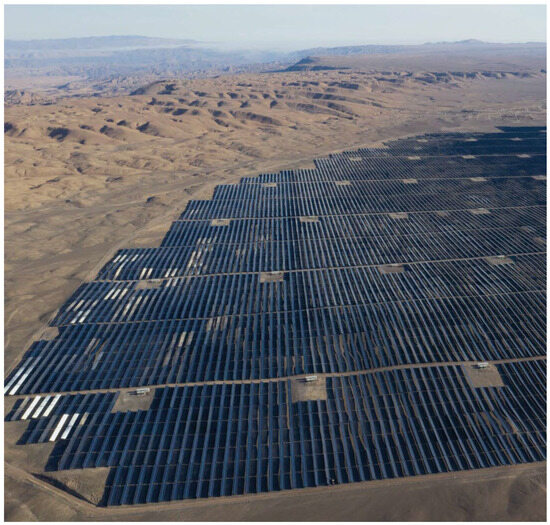
The Peruvian government is planning a series of renewable energy auctions that will target wind and solar energy. The Ministry of Energy and Mines is gearing up to significantly boost solar capacity, with an extra 2.5 GW by the end of 2028. The strategic expansion will elevate Peru’s total solar capacity to 3.1 GW. Peru plans $430M in transmission upgrades through 2034, including smart grid enhancements and high-voltage lines. New renewable energy auctions target 1.5 GW solar and 700 MW wind by 2028. Companies like Zelestra plan to invest $1-1.5B with the aim of establishing 1 GW of solar dedicated to mining. This includes the recently launched 300 MW San Martín solar park. Additionally, Inkia Energy is expanding from 228 MW to 338 MW. The shift supports Peru’s sustainable ambitions and also contributes to human capital development. Strain clamps are crucial components in power lines and solar farm electrical systems.
High-quality clamps ensure structural stability, safety, and efficiency in electrical distribution networks. Strain clamps secure and anchor overhead conductors to poles, towers, or other structures. This prevents sagging or breakage due to high winds, thermal expansion, and heavy rain. Strain clamps help maintain stable transmission lines connecting PV plants to the grid. They prevent line failures, which could disrupt power flow from large-scale solar farms to urban and industrial centers. Solar microgrids in remote areas need strain clamps to ensure durable overhead connections for mini-grid distribution systems. They help reduce maintenance costs in harsh environments to improve long-term project viability. Strain clamps must meet local and IEC standards to ensure reliability in solar projects. Strain clamps are essential for Peru’s solar growth, providing mechanical stability, grid reliability, and regulatory compliance.
Expanding solar power capacity in Peru using strain clamps
Peru needs efficient and reliable transmission infrastructure as it moves forward with its 2.5 GW solar capacity expansion. Strain clamps ensure the safe and secure transfer of generated power from solar facilities to the national grid. With the solar expansion and upcoming industrial expo, strain clamps will see higher demand in solar plant transmission lines. Adoption of preformed and compression-type strain clamps could improve both safety and efficiency in upcoming projects. Here are the functions of strain clamps in solar power expansion infrastructure in Peru.
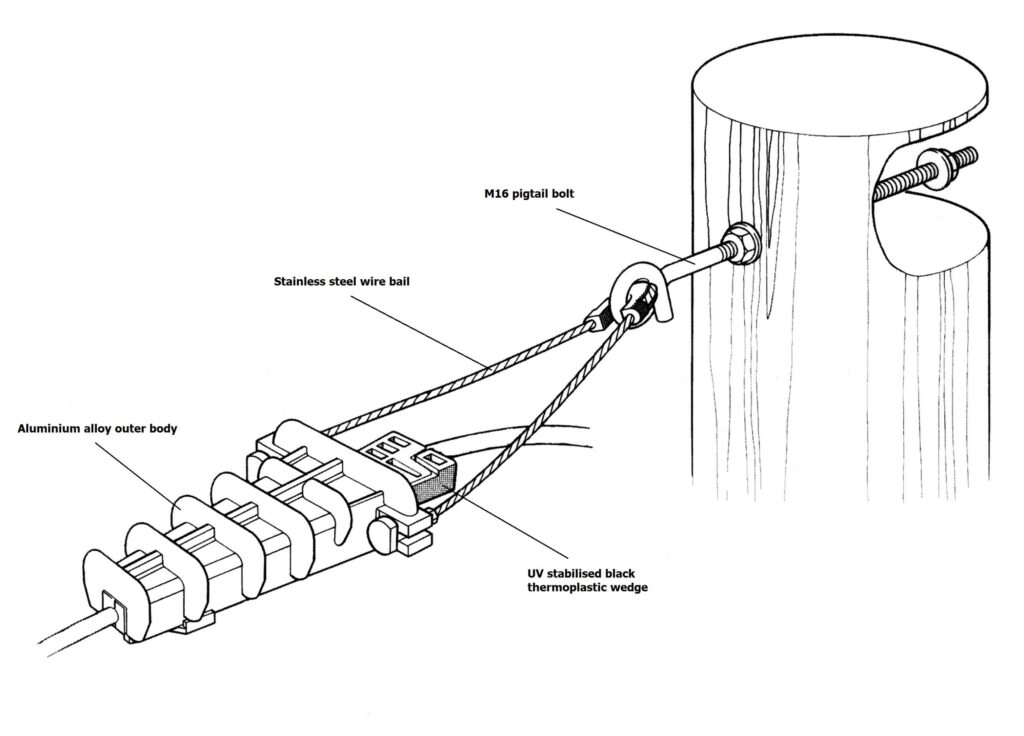
- Mechanical support in transmission lines—strain clamps anchor conductors at dead-end points on transmission and distribution lines. They secure the high-voltage lines that connect solar plants to substations and onward to the grid.
- Ensuring electrical continuity—strain clamps provide low-resistance electrical contact between conductors and support hardware. They ensure minimal power loss during transmission from large-scale solar facilities.
- Withstanding harsh Peruvian conditions—solar farms are under deployment in coastal deserts, Andean highlands, and jungle edges. Strain clamps from corrosion-resistant aluminum alloy withstand high UV exposure and temperature swings.
- Supporting grid stability—the expansion needs new transmission corridors and upgrades to existing lines. Strain clamps enable the integration of long-span lines in mountainous areas. They maintain conductor alignment, preventing sagging or snapping that could cause damage.
Key drivers behind Peru’s solar power capacity expansion
Peru plans to add 2.5 GW of solar power capacity as a response to a mix of environmental, economic, and social factors. The industry is exploring innovative technologies supporting solar power growth. These include using high-efficiency PV panels, improved energy storage, and smart grid integration. It also includes bifacial panels and tracking systems, boosting output. Key drivers behind the solar power push include:
- Growing electricity demand—expanding solar capacity ensures a stable and diversified supply to meet rising consumption. This is while avoiding overreliance on hydropower and fossil fuels.
- Abundant solar resources—Peru’s Atacama Desert region has some of the highest solar irradiance levels. This advantage makes solar power economically competitive and technically workable for large-scale projects.
- Energy diversification and security—the current grid relies on hydropower and natural gas. Climate change made water availability less predictable, which creates risk for hydropower output. Solar expansion provides energy security by reducing vulnerability to droughts.
- Rural electrification goals—off-grid and microgrid systems provide a cost-effective way to extend power access without massive transmission investments.
- Climate commitments—Peru has pledged to reduce greenhouse gas emissions by 2030 under the Paris Agreements. Solar power supports this by displacing fossil fuel generation and cutting carbon intensity.