
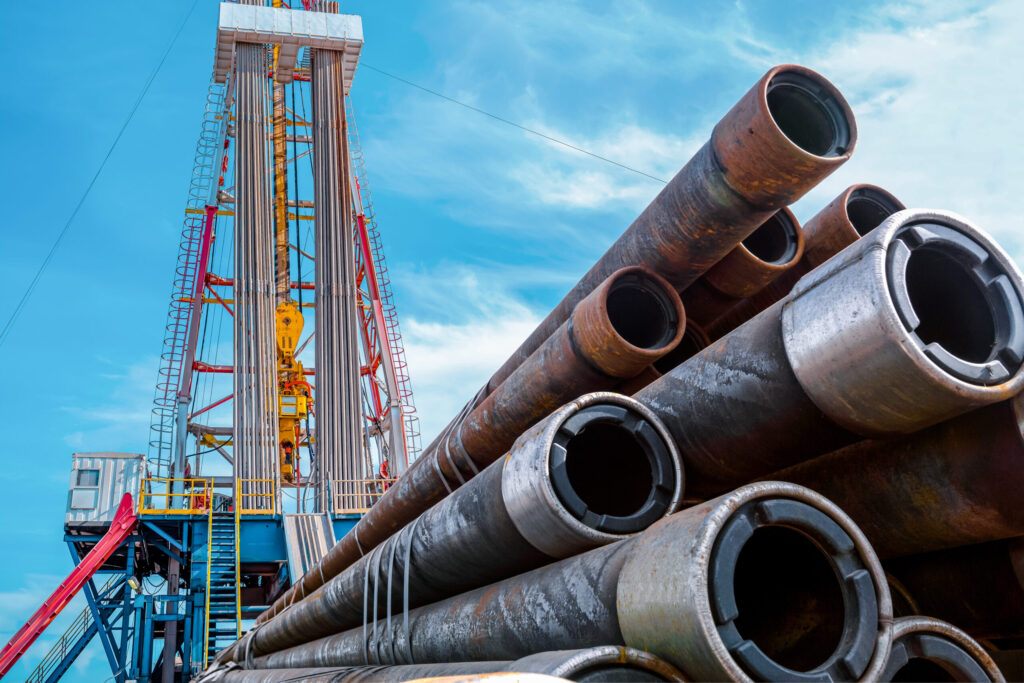
Peru is rich in oil and natural gas resources in regions like Talara, Ucayali, Camisea, and Loreto. Increasing investment in upstream exploration is a key driver of energy security, economic development, and industrial growth. Peru still imports petroleum products despite having untapped reserves. Investment increases domestic oil and gas supply, reduces dependence on volatile international markets, and supports long-term fuel price stability. Upstream investments generate high economic returns through royalties, taxes, employment, and local procurement and infrastructure development. Exploration projects lead to road and bridge construction in remote areas, deployment of electricity microgrids, and communication towers. Oil exploration introduces the first large-scale infrastructure projects for industries and local communities. Exploration ensures a balanced and resilient energy matrix while providing fuel for mining, manufacturing, and transport. Strain clamps secure and anchor conductors to withstand mechanical stresses and ensure stability and reliability of power.
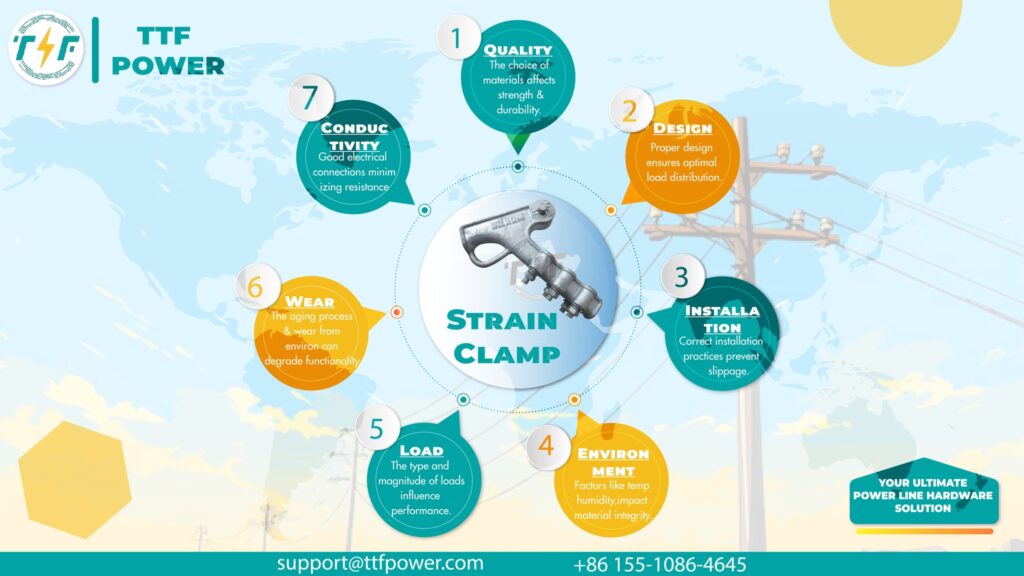
Strain clamps serve as termination points to anchor overhead power lines and prevent cables from slipping. They handle mechanical loads and thermal expansion in Peru’s diverse climates, including coastal deserts and mountainous regions. Strain clamps help reduce vibration-induced fatigue in conductors, preventing long-term damage. Upstream sites depend on uninterrupted power. High-quality clamps ensure cables remain securely fixed and reduce downtime from failures. Strain clamps serve in off-grid exploration camps, pump stations, and SCADA and communication systems for remote monitoring. Many strain clamps are made from galvanized steel or aluminum alloy to resist humidity and salt corrosion. Strain clamps anchor cables at endpoints to absorb tension from conductors. The clamps are also able to maintain structural integrity and operational continuity.
Critical roles of strain clamps in Peru’s upstream hydrocarbon infrastructure
Upstream hydrocarbon exploration in Peru depends on strong, durable, and reliable power communication lines. Strain clamps are mechanical devices used to anchor and transfer the mechanical tension of conductors in overhead line systems. The clamps play a crucial role in maintaining the mechanical, electrical, and digital reliability of upstream infrastructure. Its roles include:
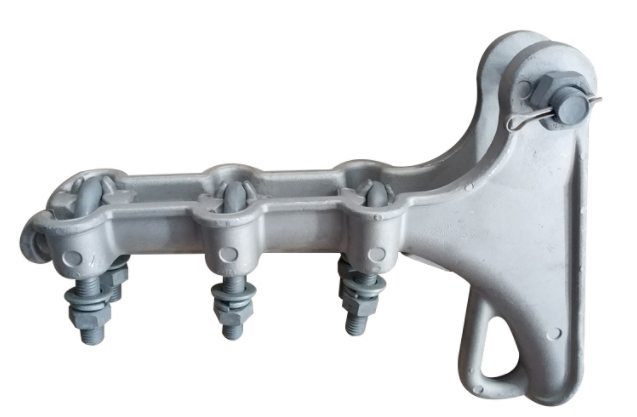
- Securing overhead power and communication lines—strain clamps work at termination points to anchor electrical transmission lines powering drilling rigs and seismic stations. They hold fiber optic or SCADA cables under tension without slippage.
- Withstanding mechanical stress and harsh environments—upstream exploration occurs in extreme conditions with high winds, heavy rainfall, and seismic activity. Strain clamps absorb and redistribute mechanical tension and line sag. This ensures the integrity of high-voltage lines, control wiring, and optical cables under stress.
- Enabling reliable power transmission—stable electrical infrastructure is crucial for mobile drilling to pumping stations. Strain clamps ensure that conductors stay aligned and taut and reduce the risk of short circuits. The clamps improve the safety and reliability of off-grid power supply systems.
- Supporting data and SCADA systems—modern upstream operations use SCADA systems for real-time monitoring of well pressure, flow rates, and equipment performance. Strain clamps support aerial fiber optic cables that send this critical data back to base stations.
- Fast deployment and relocation—strain clamps are compatible with modular poles, portable substations, and temporary aerial spans used during short-term seismic campaigns. The infrastructure used must be rapidly deployed, easily maintained, and quickly dismantled or relocated.
Limitations of upstream hydrocarbon exploration in Peru
Peru boasts significant hydrocarbon reserves in basins such as Talara, Ucayali, Camisea, and Marañón. Upstream exploration has stagnated recently due to a complex web of regulatory, environmental, social, and economic challenges. These limitations are as discussed below.
- Regulatory uncertainty—Peru’s upstream sector has slowed administrative processes and overlapping jurisdiction between government agencies.
- Environmental sensitivity in key basins—environmental opposition and global scrutiny make it difficult to secure permits or international funding for exploration.
- Indigenous resistance and social conflict—exploration blocks overlap with indigenous ancestral lands. Many communities reject oil activities due to past pollution and broken promises.
- Declining investment and lack of incentives—upstream exploration has attracted limited new investment over the last decade.
- Inadequate geological and infrastructure data—exploration decisions depend on reliable geological surveys and field access. Most investors are unwilling to commit without clearer technical assessments.
- Global energy transition and ESG pressure—international companies are influenced by environmental, social, and governance standards. Peru’s oil-heavy blocks face reputational risks, which makes it harder to attract capital.