
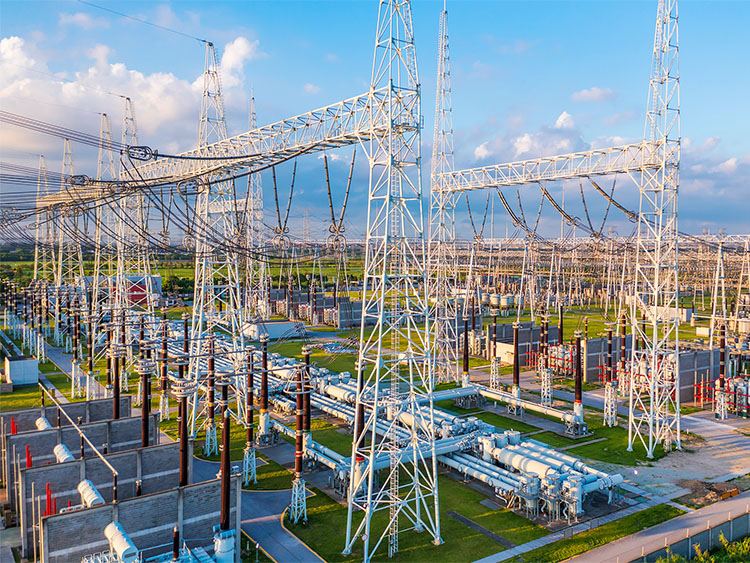
Transemel’s transmission and substation infrastructure forms a regulated segment of Chile’s National Electric System (SEN). The infrastructure has positioned itself as the transmission operator supporting mining loads, renewable energy integration, and regional grid stability. Transemel operates a network that includes 423 km of high-voltage transmission lines and five substations. The transmission system supports high-reliability power supply to mining loads, high-capacity energy transport for ore extraction and processing, and voltage stability for large industrial motor loads. The five substations provide voltage transformation between transmission levels, switching and protection, power flow management, and grid stability support. With expanding solar capacity and electrified mining demand, Transemel’s infrastructure will maintain grid stability and transmission efficiency across the power system. Trunnion suspension clamps serve in this infrastructure to suspend conductors from insulator strings in transmission lines and substations.
The trunnion design acts as a pivot to allow controlled oscillation of the clamp and conductor. They serve on suspension insulator strings to support the conductor vertically and allow it to swing to accommodate thermal expansion and contraction. Trunnion suspension clamps suspend bus conductors from post insulators to provide a flexible support that prevents the transfer of excessive mechanical stress to the substation equipment. Suspension clamps carry the vertical weight of the conductor across a span. It holds the conductor without needing to grip it with the full breaking strength. The clamp reduces the transfer of high frequency, low-amplitude vibrations to the rigid insulator string. This protects the conductor from metal fatigue at the suspension point.
Quality assurance for trunnion suspension clamps used in transmission and substation networks
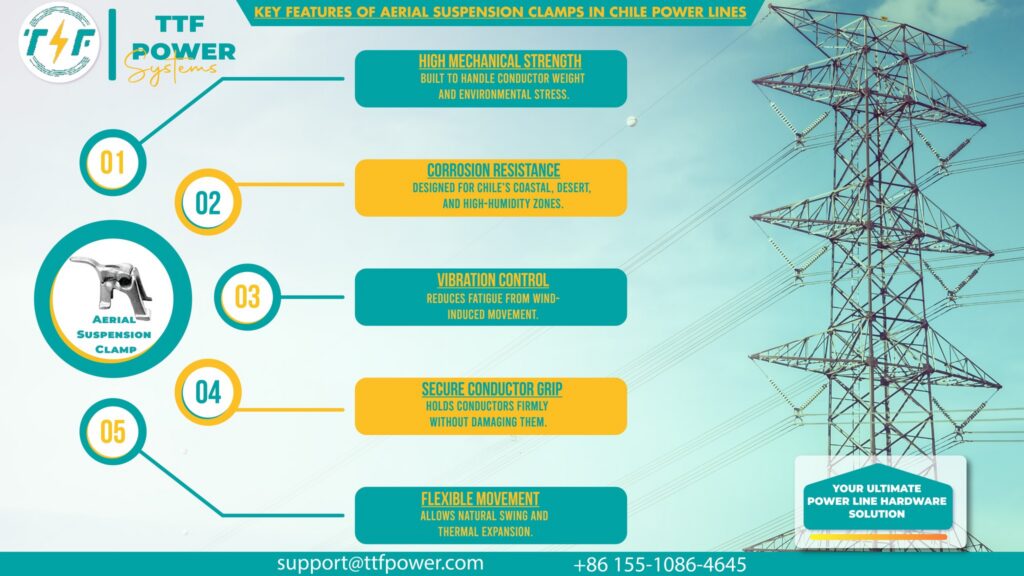
Quality assurance for suspension clamps is crucial in Chile’s transmission and substation infrastructure. This is because the components support conductor suspension, mechanical load transfer, and vibration-controlled movement in overhead line systems. QA ensures that trunnion clamps perform reliably over long service life. Quality assurance begins by ensuring compliance with international overhead line fitting standards. These standards define criteria such as mechanical load capacity, slip resistance under conductor loading, vibration resistance performance, and articulation and rotation capability of the trunnion joint. The process also includes raw material quality control, machining control, dimensional inspection, mechanical performance testing, rotation function testing, and torque control verification. Quality-assured trunnion suspension clamps improve grid reliability, reduce maintenance risks, and extend infrastructure service life.
The functions of the trunnion suspension clamps in transmission and substation networks
Trunnion suspension clamps support conductors on transmission towers and substation structures. They perform mechanical and operational functions that influence grid reliability and asset longevity. Here are their key functions in the infrastructure.
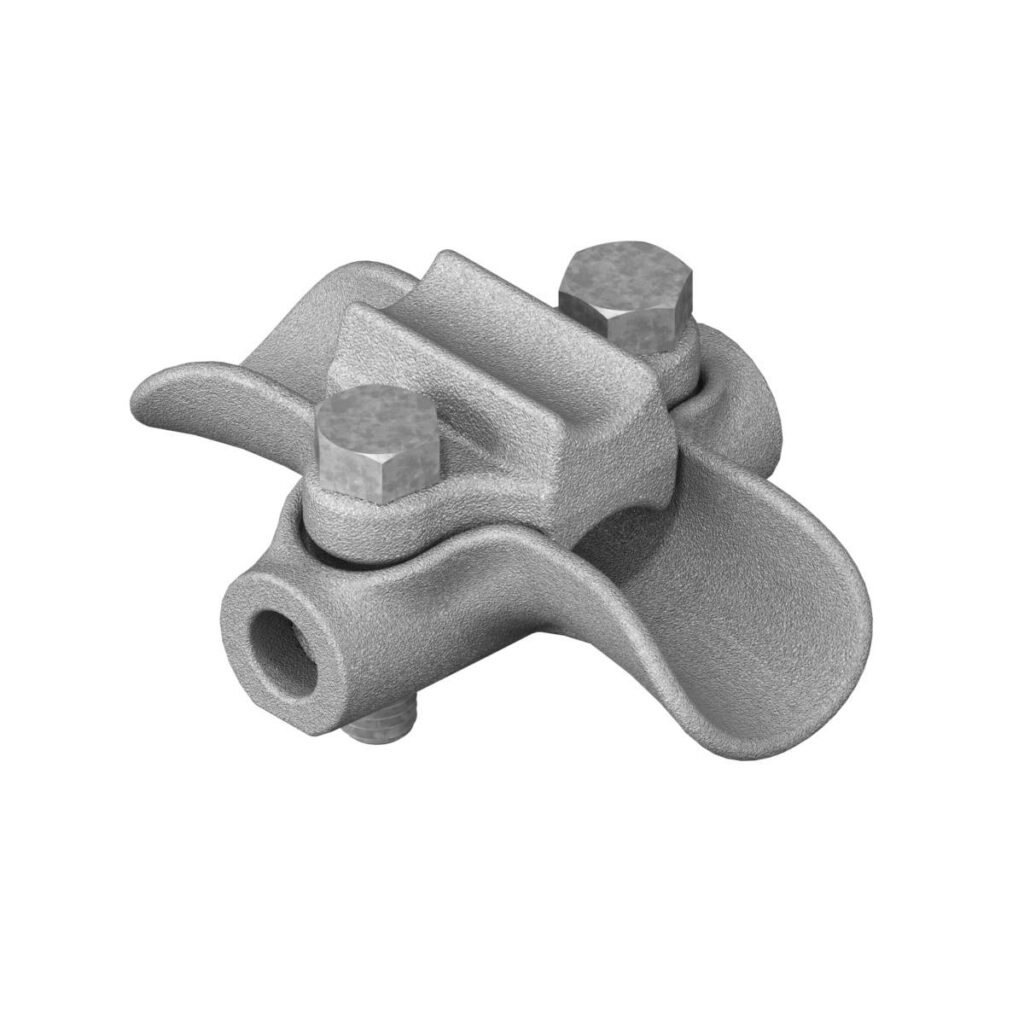
- Conductor suspension and mechanical support – trunnion suspension clamps suspend and support overhead conductors. It holds the conductors at suspension towers and transfers vertical mechanical loads to the insulator string.
- Controlled conductor movement – the clamps have the ability to allow controlled angular movement. The articulation permits rotation of the clamp around a horizontal axis, accommodates conductor swing, and reduces torsional stress on the conductor.
- Load transfer to insulator strings – suspension clamps act as a mechanical interface between conductor and insulator assemblies. They transfer loads to maintain mechanical integrity in both transmission lines and substation jumper arrangements.
- Protection of conductor integrity – trunnion suspension clamps avoid excessive clamping pressure on conductor strands and prevent abrasion and fretting at contact points.
Integration of renewable energy zones with Transemel’s transmission and substation networks
High solar irradiation in the north and wind and photovoltaic projects in Chile demand high-quality infrastructure to deliver renewable power to the grid. Transemel’s network supports energy evacuation, grid stability, congestion reduction, and decarbonization goals. Here are the integration roles in Chile’s renewable energy zones.
- Substation in renewable energy integration—the substation connects step-up transformation from medium-voltage solar and wind plants to transmission voltage levels.
- Transmission lines as renewable evacuation lines—the lines enable the transport of solar energy from remote generation zones. They also enable delivery of wind-generated power from sites.
- Grid balancing and variability management—the Transemel’s infrastructure balances the system by enabling redistribution of power across interconnected nodes.
- System stability under high renewable penetration – these assets support reactive power management at substations and stabilize frequency and voltage variations.
- Support for energy transition and decarbonization—the infrastructure enables a higher renewable share, ease of replacement of fossil fuel generation, and support for electrification of industrial sectors.