
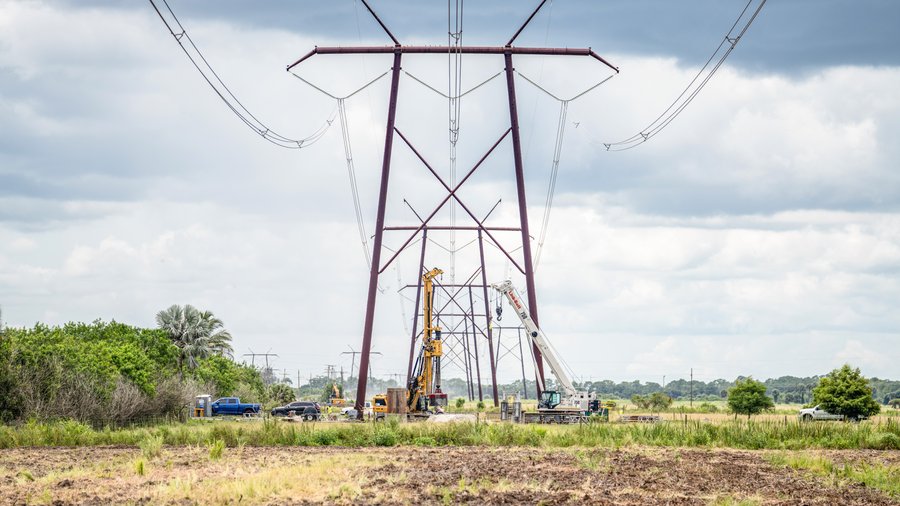
EDP, a Portuguese energy company, plans to invest BRL 450 million between 2026 and 2028 to support the modernization of Goiás’s electricity transmission infrastructure. The investment will target transmission lines and substations, focusing on capacity expansion, reliability, automation, digitalization, and new grid connections. The investment is a strategic center of excellence for its transmission business. The company also intends to concentrate technical expertise, operational knowledge, and innovation in the state. EDP’s investment will increase the grid’s ability to transport electricity safely and efficiently. Modern and upgraded equipment will offer electricity to demand centers such as agribusiness, industrial activity, data centers, and technology-intensive businesses. Currently, EDP operates 907km of transmission lines and 16 substations in Goias, with another 285km of transmission lines and a new substation under construction. These developments rely on power line hardware such as the Y clevis ball.
High-quality Y clevis balls connect and anchor ball-and-socket-type insulators to transmission towers, substation structures, and other equipment. The design provides a secure mechanical connection and the flexibility needed for the hardware to function under various loads and environmental conditions. The clevis ball acts as a link to attach a string of insulators to the tower’s support structures. Its design allows flexibility to allow the insulator string to move and align with the conductor. This reduces stress from wind, temperature changes, and line tension. The Y clevis ball is also designed with a specific angle to allow the articulation while reducing the bending force on the connection bolt. Complying with standards ensures a standardized and secure fit for different strength and voltage requirements.
Conducting quality assurance for Y clevis balls used in Brazil’s transmission works and modernization equipment
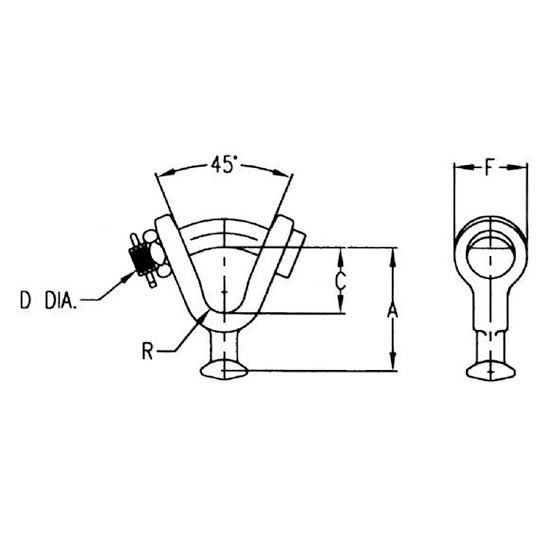
The Y clevis ball connects a ball-and-socket insulator arrangement with related hardware while providing the articulation needed for the string assembly. Conducting quality assurance prevents failures that can affect the integrity of the insulator string. QA addresses material integrity, dimensional accuracy, mechanical strength, galvanizing, interchangeability, locking security, and surface condition. This is through verifying chemical composition, mechanical properties, tensile strength, yield strength, hardness, and forging quality. During the manufacture of the Y clevis ball, QA checks forging temperature, die condition, forging reduction, heat treatment, cooling procedures, machining tolerances, and removal of forging flash. Poor process control can produce internal discontinuities, laps, cracks, or dimensional deviations. During installation, QA confirms the correct component, correct ball-and-socket compatibility, correct locking device installation, correct orientation of the Y clevis, and absence of cracks. Incorrect installation can create eccentric loading or inadequate locking even when the component has passed factory tests.
The importance of the Y clevis ball in Brazil’s transmission works and modernization equipment
The Y clevis ball connects and articulates components within the insulator string. It forms part of the mechanical load path between the insulator assembly and supporting structure. With EDP’s investment in Brazil’s transmission networks, the clevis ball is crucial for expanding and modernizing the network. Here are the key roles of the Y-clevis ball in the transmission networks.
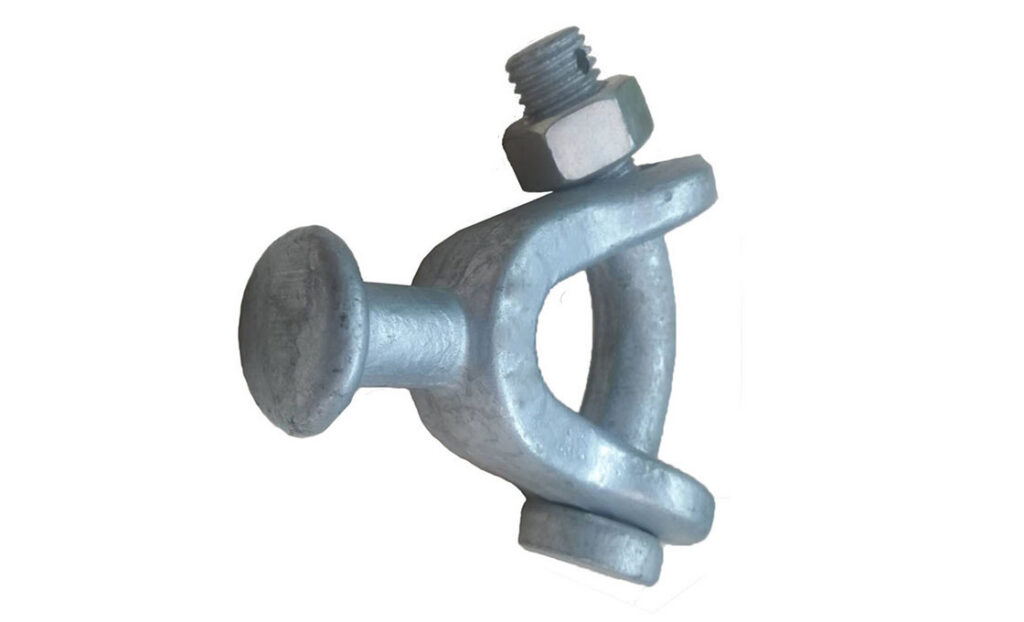
- Connecting insulator-string components—the Y clevis ball provides a reliable mechanical connection between compatible transmission hardware and the insulator string.
- Transferring mechanical loads—transmission conductors and insulator strings face mechanical forces from conductor tension, wind loading, conductor weight, temperature changes, and line-angle forces. The Y clevis ball offers mechanical strength that corresponds to the design loading.
- Providing articulation—the articulation helps the insulator string respond to changes in conductor geometry and mechanical loading without excessive bending stresses on individual fittings.
- Improving mechanical safety—the clevis ball maintains secure engagement throughout the operating life of the line. Its design prevents unintended separation while allowing the articulation for the insulator assembly.
EDP’s investment supporting the digital transmission network in Brazil
EDP’s BRL 450 million investments will expand the transmission capacity and incorporate digital technologies into the infrastructure. The program includes advanced protection and automation systems, substation modernization, optical fiber deployment, equipment upgrades, and new connection points. These measures aim to make the network more intelligent, resilient, and capable of supporting data centers, high-tech industry, and connected agribusiness. EDP currently operates 907 km of transmission lines and 16 substations in Goa, with another 285 km of lines and a new substation under construction. This concentration creates an environment for developing and testing digital transmission solutions. This could make the country a reference point for digital transmission engineering, asset management, and operational practices within EDP’s wider network.