
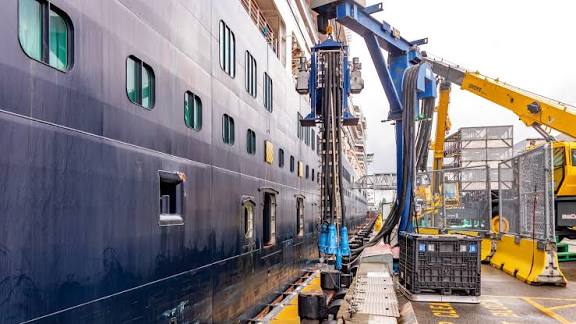
The China Zorilla, a 130-metre electric ferry, has entered regular commercial service in Argentina. The ferry carries passengers and vehicles between Argentina and Uruguay. It is also equipped with a battery system with a capacity 41.2 MWh. Corvus Energy, a leader in marine energy storage systems, is partnering with naval electrical solutions company Servintel to provide technical support for Argentina. The vessel uses an electrical propulsion system designed for a demanding, high-speed crossing between Argentina and Uruguay. Its battery system must supply propulsion power and support the vessel’s electrical loads within the operating schedule. The vessel also uses a fully electric propulsion arrangement, battery modules, power conversion equipment, and energy management controls. The integrated system must coordinate battery output, electric motors, and charging operations to support the ferry’s scheduled service. These systems rely on robust hardware such as ground rods to provide a low-impedance path.
Energy storage cabinets, battery racks, inverters, and control cabinets must be grounded. The ground rod provides a low-resistance path, prompting the protection device to operate quickly and prevent electric shock and fire. Marine regulations need a grounding connection to be made at a single point near the main switchboard. The grounding system needs to conduct powerful lightning currents into the sea and protect electronic equipment from surge damage. Ground rods maintain the same potential and avoid sparks caused by potential differences. They also guide fault currents and lightning surges into the sea. They maintain equipotential bonding of the metal structures to ensure the safe operation of the entire energy storage system.
Importance of quality assurance for ground rods used in marine energy storage systems in Argentina
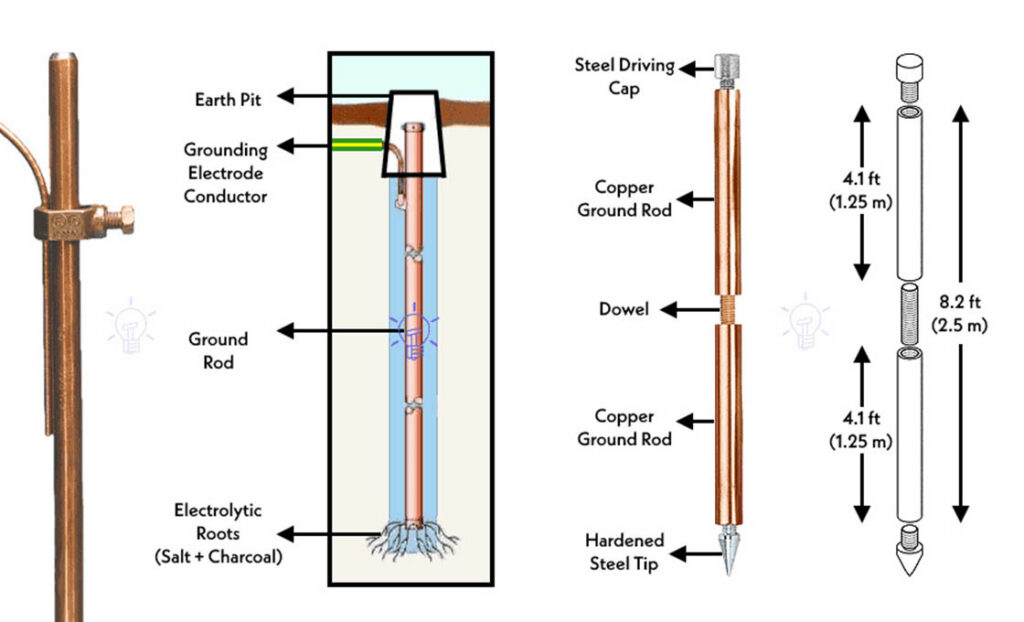
Ground rod clamps provide the earth connection for electrical installations for marine energy systems. They form part of the grounding and equipotential bonding network that helps control fault currents, limit touch voltages, and support the operation of protective devices. The project includes battery-electric and hybrid vessels, including systems connected to shore charging infrastructure. Ground rods must withstand demanding and environmental conditions. Quality assurance for the rods helps verify that each rod meets its material, dimensional, electrical, and corrosion-resistance requirements before installation. Marine grounding design can include protective bonding conductors, hull connections, equipment enclosures, shore-power arrangements, and grounding electrodes at shore facilities. The QA process should cover material quality and corrosion resistance verification, electrical conductivity and grounding performance, quality of joints, clamps, and connecting accessories inspection, and corrosion-resistance testing. These factors help prevent premature deterioration and maintain dependable grounding connections at ports and shore-charging facilities.
Ground rods in Argentina’s marine energy storage systems
Ground rods serve in grounding systems used at ports, shore-charging stations, and other electrical facilities. They create an electrical connection between the grounding network and the earth. The connection helps manage fault currents, control dangerous voltage differences, and support the safe operation of electrical protection equipment. Here are their key roles in shore-side infrastructure.

- Providing a path for electrical fault currents: ground rods help connect to the facility’s protective earthing network. This establishes a controlled path for fault current and supports the operation of protective devices.
- Controlling dangerous touch and step voltages: the rods help manage the electrical potential of grounding systems during fault conditions. A grounded electrode network helps distribute current into the soil and control these voltage gradients.
- Supporting lightning protection systems: ground rods provide an earth connection for lightning protection systems when incorporated into the facility’s grounding electrode network. They help conduct lightning current from down conductors into the earth.
- Supporting safe shore-power and battery charging operations: ground rods contribute to the eathening arrangement at shore-power connections and battery charging stations.
Importance of shore-charging infrastructure for electric ferries in Argentina
Shore-charging infrastructure connects vessels to the land-based electrical supply and allows their batteries to recharge between trips. Electric ferries may face longer turnaround times, restricted operating schedules, and greater dependence on backup power. The China Zorilla, a 130-metre battery-electric ferry serving between Argentina and Uruguay, entered commercial service with a 41.2 MWh capacity. Shore charging needs suitable grid connections, transformers, switchgear, power conversion equipment, protection systems, control interfaces, and the safe connections between the shore supply and the vessel. The project offers faster battery charging, supports reliable ferry operations, reduces emissions, and improves energy management and grid integration. Well-designed infrastructure can support existing ferry services and provide a foundation for future electrification.