
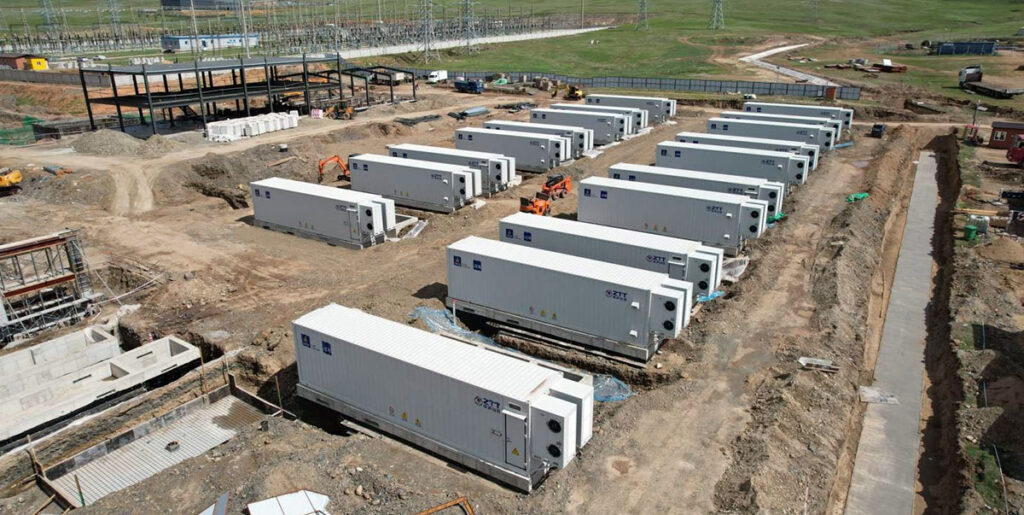
Chile recently secured $156 million in financing from Canadian independent power producer (IPP) Innergex Renewable Energy. This supports the growing importance of renewable energy and battery storage in Chile’s evolving electricity sector. The investment supports the development of two BESS while refinancing existing wind, hydropower, and solar assets. The investment also supports Chile’s ambitions to retire coal-fired power plants and expand renewable energy generation. Addition of the BESS helps manage the variability of solar and wind generation. Energy storage is crucial for maintaining grid reliability and ensuring power supply. Additionally, the investment supports mining operations in Chile that demand reliable electricity to maintain production. The financing also shows strong international investor confidence in Chile’s energy market. The development creates demand for power infrastructure assets, including transmission lines, substations, cable suspension bolts, grounding systems, and connectors.
Cable suspension bolts anchor and support power cables and conductors on poles and towers within BESS, renewable energy plants, and the power grid. They ensure the mechanical stability, electrical safety, and reliability of the interconnection infrastructure. Suspension bolts bear the weight of heavy cables, cable trays, and fiber optic lines. This is by transferring vertical and lateral loads from the cables through suspension clamps into the supporting structure. This helps prevent localized stress that could damage the cables. High-quality bolts secure damping systems that reduce oscillations and prevent the fatigue and loosening that can lead to failure. Suspension bolts reduce the risk of conductors rubbing together, which could wear away insulation and lead to short circuits, ground faults, or flashovers.
Quality assurance for cable suspension bolts used in BESS interconnection projects
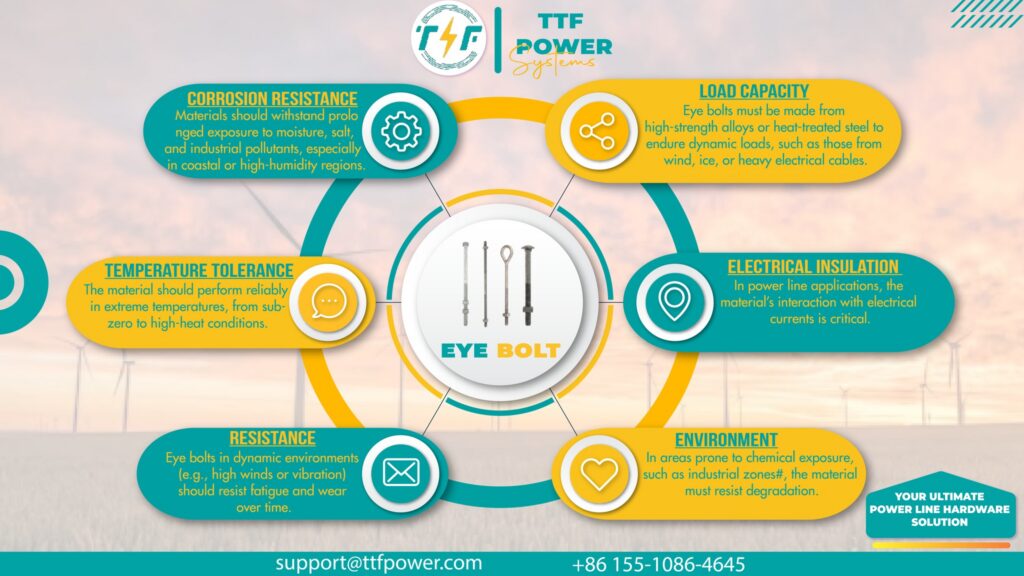
Cable suspension bolts support, secure, and suspend power cables, grounding conductors, and cable trays in BESS projects. The quality and reliability of cable suspension bolts affect the safety, stability, and longevity of electrical infrastructure. Effective quality assurance ensures reliable cable support, improved personnel safety, reduced maintenance costs, and enhanced system reliability. QA ensures that cable suspension bolts provide dependable service throughout the lifespan of Chile’s growing BESS infrastructure. The process includes raw material verification, dimensional accuracy inspection, mechanical strength testing, thread quality assessment, and corrosion protection verification. It also includes surface defect inspection, environmental qualification testing, vibration testing, and installation quality assurance.
The functions of cable suspension bolts in BESS interconnection projects in Chile
Cable suspension bolts in BESS projects support, secure, and manage electrical cables and infrastructure. They ensure the safety, reliability, and structural integrity of BESS facilities and their grid connections. Their key functions include:
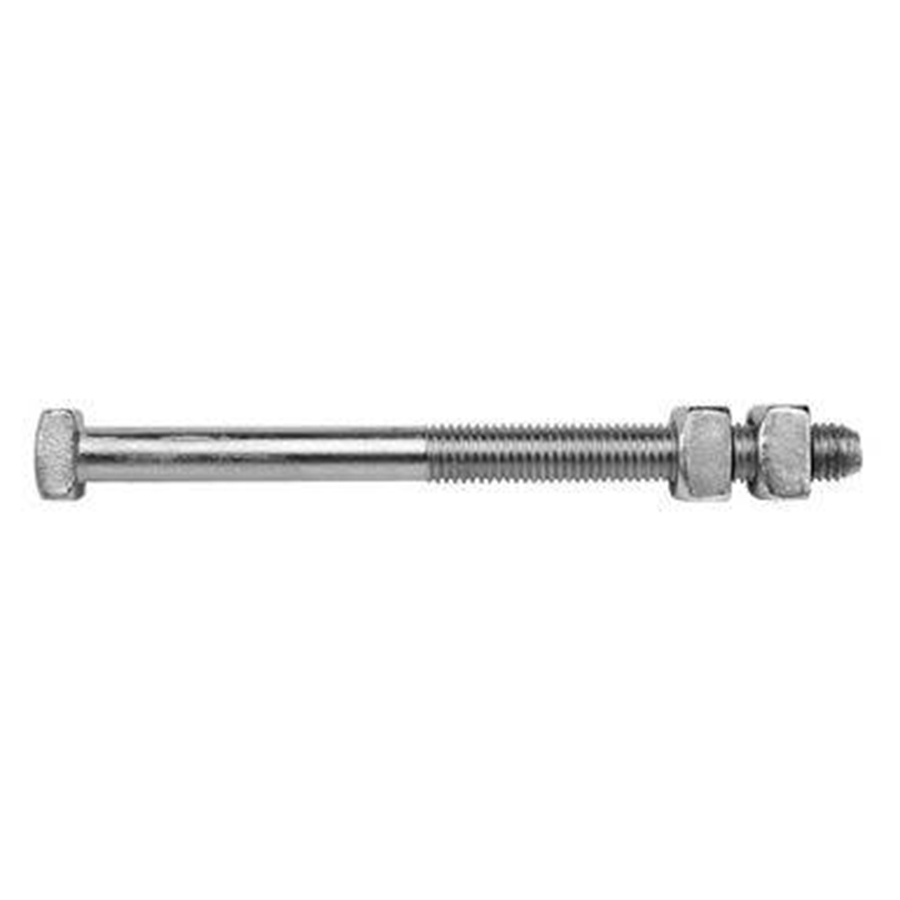
- Supporting power and control cables—cable suspension bolts provide secure attachment points for cable support systems. They help suspend cables, support communication and control cables, and maintain proper cable routing.
- Supporting safe grid interconnection—the bolts secure interconnection cables, support cable terminations, and maintain proper cable clearances. These contribute to safe and efficient power transfer between the battery storage facility and the electrical grid.
- Improving cable management and organization – modern BESS installations contain electrical and communication cables. The bolts organize cable routing and separate power and communication circuits.
- Supporting equipment connectivity—cable suspension bolts secure cables connected to battery containers, inverters, power conversion systems, transformers, and switchgear.
- Accommodating thermal expansion and contraction – cable suspension bolts help maintain cable support, reduce strain caused by expansion and contraction, and prevent cable deformation.
BESS development advancing energy security in Chile
Chile is rapidly advancing renewable energy capacity in solar and wind generation. Integrating BESS helps overcome reliability challenges related to variable power production. BESS enhances grid flexibility, reduces dependence on imported fuels, and improves system reliability. They help strengthen Chile’s ability to provide secure and sustainable electricity supplies. Here are the impacts of the development in Chile’s energy security.
- Improving renewable energy reliability—BESS improves renewable reliability by storing excess energy and delivering electricity during low-output periods.
- Reducing dependence on imported fossil fuels – this dependence exposes the country to fuel price volatility, supply chain disruptions, and exchange rate fluctuations. BESS projects reduce the need for fossil-fuel-based backup generation.
- Enhancing grid resilience – BESS projects offer frequency stabilization, voltage regulation, black-start capabilities, and emergency power support. These improve the grid’s ability to respond to unexpected outages and operational challenges.
- Coal plant retirement – Chile aims to reduce carbon emissions and retire coal-fired generation assets. BESS development replaces some functions of thermal power plants and provides grid balancing services.