
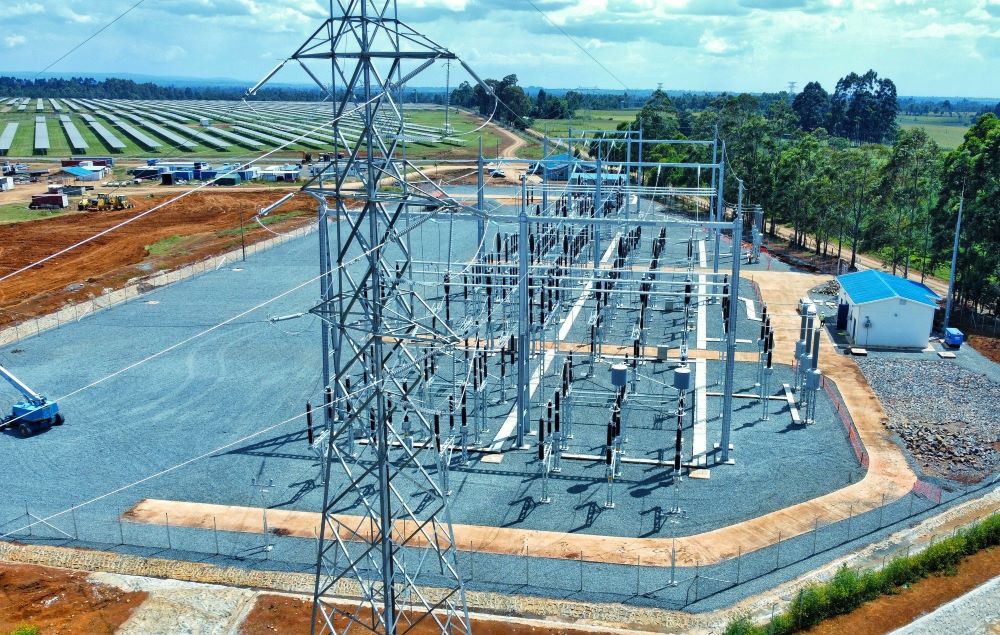
Mundo Marino collaborated with YPF Luz to supply the electricity demand of its theme park located in San Clemente del Tuyú. This company covers 80% of its energy consumption and reinforces its commitment to making its operations sustainable. The energy comes from the El Quemado Solar Park with an installed capacity of 305 MW. The contract has a 5-year duration and allows for the supply of 2,400 MWh of renewable energy per year. This solar park uses high-efficiency photovoltaic technology designed to maximize energy production under high solar irradiance conditions. These PV arrays are engineered to optimize annual energy yield while reducing energy losses. It also includes high-voltage substations that prepare electricity for long-distance transmission. Common equipment used includes power transformers, circuit breakers, disconnect switches, voltage transformers, and line surge arresters. Line surge arresters protect the solar equipment from lightning strikes and switching surges.
Surge arresters ensure safe grid interconnection and maintain system reliability. Lightning strikes on the overhead transmission lines can result in overvoltage that travels along the line and causes damage. The arrester is installed on the lines to reduce the overvoltage to safe levels that protect the step-up transformer. The arrester also serves on the DC and AC sides of the inverters to protect sensitive components from overvoltages. Line surge arresters also protect collector cables to ensure full protection. Additionally, a surge arrester must have a short-circuit current rating that is greater than the maximum short-circuit current of the PV system it is protecting.
Quality assurance for line surge arresters used in Argentina’s solar park infrastructure
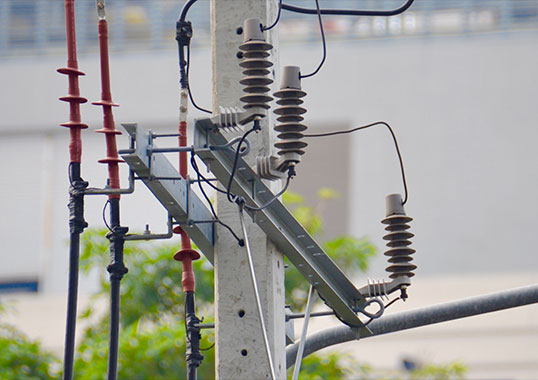
Line surge arresters connect utility-scale solar parks to the electricity grid by protecting the equipment from overvoltages. The arrester protects transformers, insulators, switchgear, inverters, overhead conductors, and other electrical equipment from transient overvoltages. Quality assurance for the arresters ensures they deliver reliable protection. QA helps identify defects that lead to failures exposing the electrical assets to damaging overvoltages. Quality assurance reduces these risks by ensuring every arrester meets its electrical, mechanical, and environmental performance specifications before installation. QA protects solar park equipment from transient overvoltages, improves transmission and distribution system reliability, and supports continuous renewable energy delivery to the grid. The process includes raw material verification, dimensional inspection, mechanical strength testing, and electrical performance testing.
Functions of the line surge arresters in solar park infrastructure
Line surge arresters serve on overhead transmission and distribution lines connecting utility-scale solar parks to the electrical grid. The arresters protect power system equipment from transient overvoltages caused by lightning strikes and switching operations. Line surge arresters improve the reliability, availability, and longevity of the power evacuation system. Here are the key roles of the arresters in the solar infrastructure.
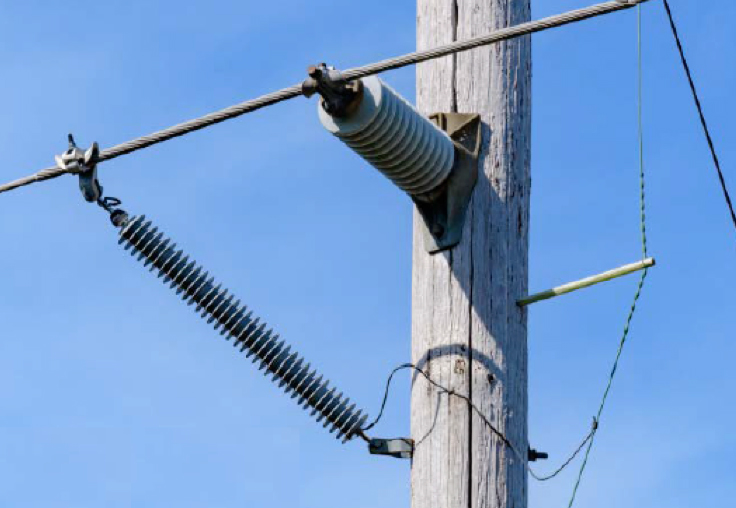
- Protecting against lightning strikes—the arresters divert lightning-induced surge currents to the ground, limit overvoltage levels, and prevent insulation breakdown.
- Limiting switching overvoltages—surge arresters suppress surges produced during circuit breaker operations, transformer energization, and capacitor bank switching.
- Protecting transmission line insulators—by reducing voltage across insulator strings, the arresters prevent flashovers, reduce insulation damage, and maintain transmission reliability.
- Protecting solar plant inverters—line surge arresters protect IGBT modules, power electronics, DC/AC conversion equipment, and control systems. Reducing the surge exposure extends inverter operational life.
- Diverting high-energy surge currents—the zinc oxide varistor inside the arrester absorbs and dissipates large amounts of surge energy. This prevents permanent damage to electrical assets in the solar park.
Influence of the solar park on Argentina’s sustainability goals
The El Quemado solar park has an installed capacity of 305 MW and plays a crucial role in advancing the transition toward a low-carbon energy system. The project supports the objectives of reducing greenhouse gas emissions, increasing renewable energy penetration, and improving energy security. Its influence is as discussed below.
- Increasing renewable energy capacity—the El Quemado solar park is adding 305 MW of clean generation capacity and increasing the share of renewable electricity supplied to the grid.
- Reducing greenhouse gas emissions – solar power generates electricity without combustion that reduces direct emissions of carbon dioxide and sulfur dioxide.
- Improving energy security – utility-scale solar projects improve security by diversifying electricity sources and reducing exposure to fuel supply disruptions.
- Enhancing grid decarbonization—solar energy displaces electricity that might be produced by fossil fuel-fired power plants. This contributes to lower grid emissions, cleaner electricity, and increased renewable penetration.