
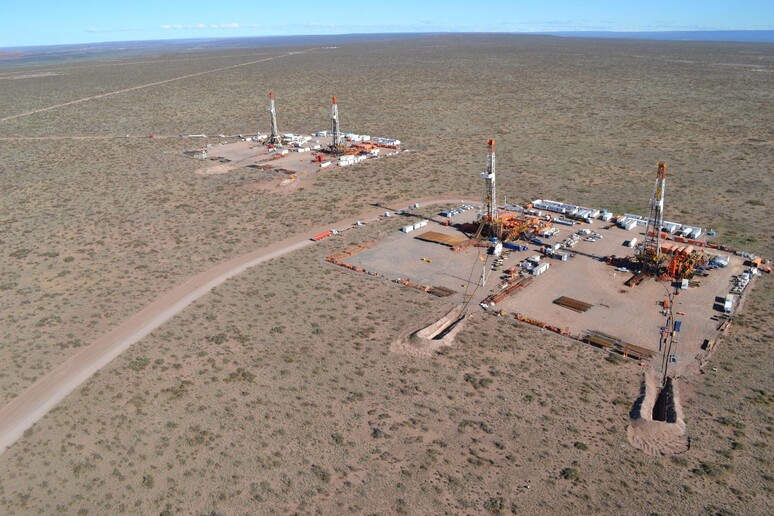
Vaca Muerta is one of the largest shale oil and gas reserves and its development has altered Argentina’s energy balance. Its development has enabled Argentina to reduce reliance on imported liquefied natural gas during peak demand cycles. Oil and gas extraction requires hydraulic fracturing and horizontal drilling which unlock hydrocarbons trapped in the rock. The technological shift helped transform Argentina’s energy sector making the formation a driver of rapid growth in crude oil production, expansion of natural gas output, rising energy exports and reduced imports, and increased foreign investment in upstream development. These developments use socket clevis for securing, supporting, and tensioning the large-scale electrical and structural infrastructure that powers and stabilizes field operations.
Using the socket clevis in Vaca Muerta supports the massive electrical grid required to power operations. It connects, supports, and tensions overhead power lines and static grounding wires on transmission towers. The socket clevis links conductor or insulator strings to the towers and holds them in place under high mechanical tension. The clevis transfers the immense weight and tensile force of long-span conductors from the power line down through the insulator string and into the transmission tower structure.
Limitations to turning Vaca Muerta into an export hub
Argentina’s export ambition is limited by systemic industrial, macroeconomic, and infrastructure challenges that determine whether production can reach international markets. Common challenges include infrastructure bottlenecks, LNG export gap and monetization limits, high production and financing costs, macroeconomic instability, investment uncertainty, environmental constraints, and operational scaling limits.
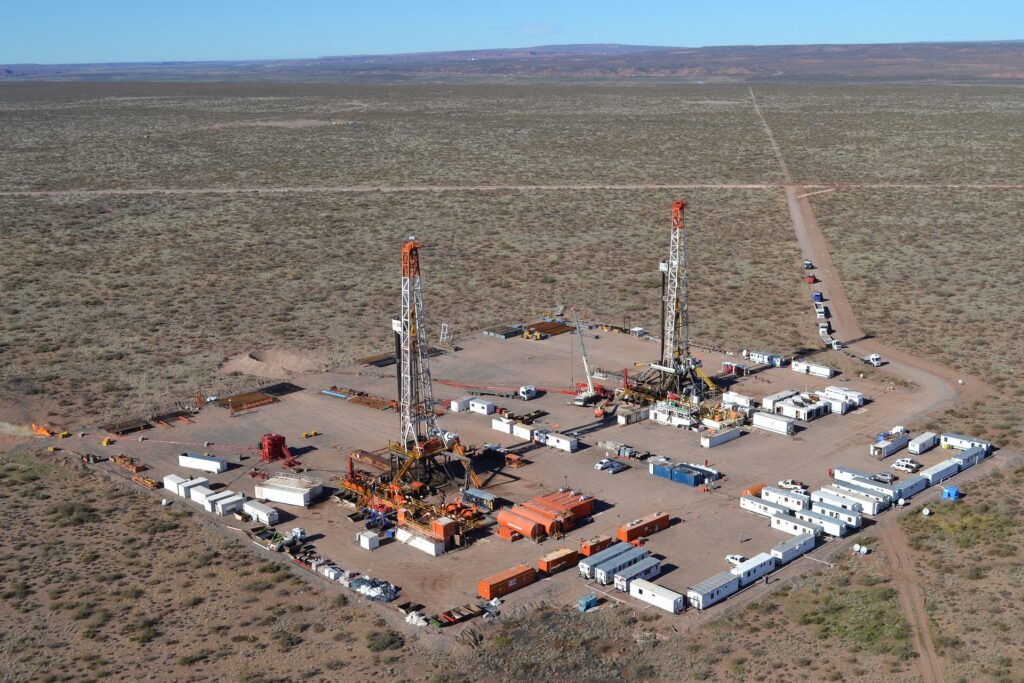
However, using the socket clevis in the Vaca Muerta infrastructure improves the reliability of the electrical and mechanical backbone needed for large-scale shale production and export expansion. Vaca Muerta’s export growth depends on stable power supply for drilling rigs, compressors, pumping stations, and processing plants. Socket clevises maintain secure mechanical connections in transmission systems, reduce line failure risks, and support consistent power delivery to remote shale operations. Additionally, they enable faster installation of overhead systems, easier maintenance and component replacement, and modular expansion of electrical networks.
Functions of the socket clevis in Vaca Muerta’s shale formation infrastructure
In Vaca Muerta’s development ecosystem, the socket clevis supports the electrical infrastructure enabling drilling, processing, and export operations. Shale production depends on continuous, high-reliability power delivery across remote and mechanically demanding environments in Argentina. Here are the key functions of the socket clevis in Argentina’s Vaca Muerta shale formation.
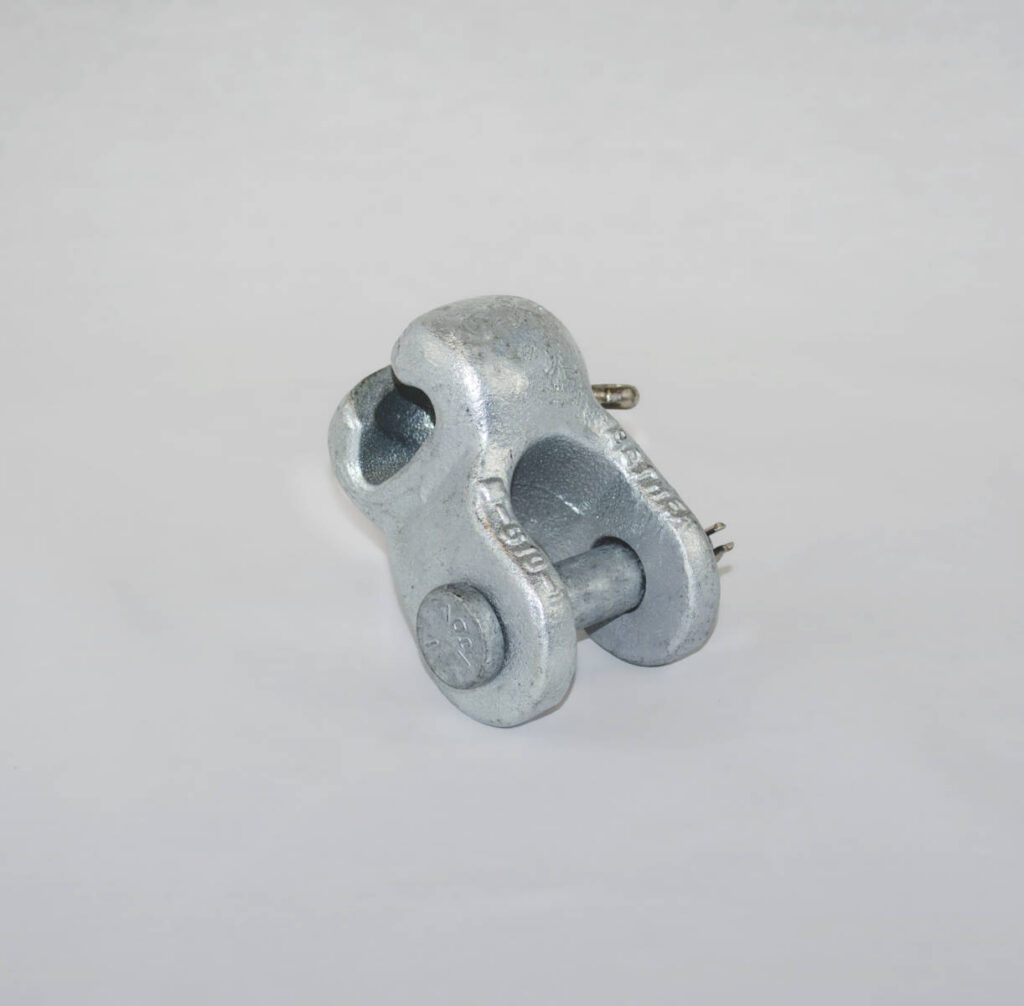
- Mechanical linkage in overhead transmission systems – the clevis acts as a connector between insulator strings and line fittings. It ensures that transmission systems feeding shale operations remain mechanically stable.
- Load transfer and stress distribution – the clevis transfers tensile loads from conductors to support structures, reduce localized stress on insulators, and prevents premature failure at connection points.
- Allowing angular movement and flexibility – the socket clevis enables limited articulation between connected components and absorbs mechanical movement caused by wind and thermal expansion.
- Supporting grid reliability for upstream and midstream operations – reliable electricity is crucial for hydraulic fracturing equipment, pumping and compression stations, and water treatment and recycling systems.
Quality assurance for the socket clevis used in Vaca Muerta’s shale formation
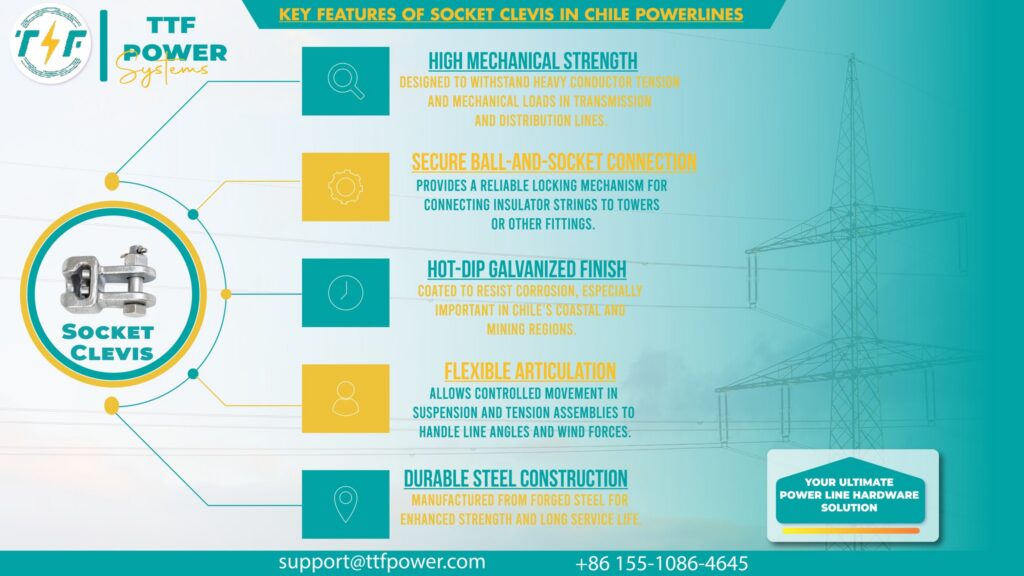
Quality assurance for the clevis ensures mechanical reliability, reliability, corrosion resistance, and load-bearing integrity under harsh operating conditions. It prevents failures that turn into costly production downtime in the Vaca Muerta operations. QA ensures the socket clevis meets structural demands through verification of forged steel, chemical composition checks, material traceability records, and certification to relevant standards. This ensures they can withstand long-term mechanical stress without brittle failure. QA process also includes mechanical strength and load testing, dimensional accuracy, corrosion protection, non-destructive testing, and field performance validation. These controls ensure overhead transmission systems remain reliable, reduce downtime, and support uninterrupted shale production and export operations.
Materials for the socket clevis used in Vaca Muerta shale formation
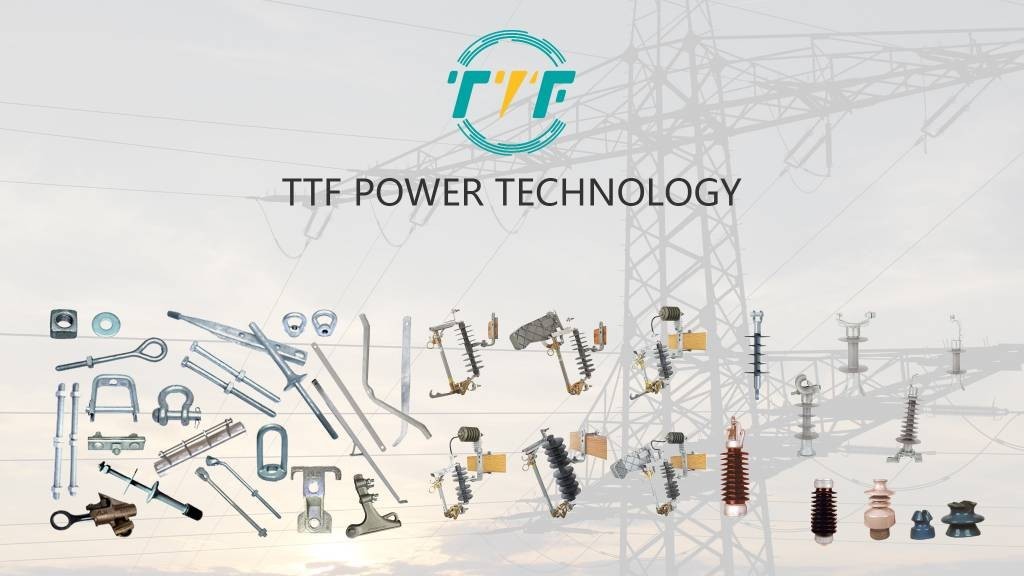
The socket clevis is designed for high mechanical loading, corrosion resistance, and structural reliability. They serve in overhead line systems, guying assemblies, mechanical linkage systems, and heavy-duty support structures. These structures then connect to drilling, pipeline, and power distribution infrastructure. They are from materials such as forged carbon steel, hot-dip galvanized steel, and alloy steel. Other materials include stainless steel, ductile iron, protective coatings, and pin and fastener materials. Proper material selection should provide high tensile strength, fatigue resistance, and corrosion protection. This is crucial under the demanding operational conditions of shale oil and gas infrastructure.