
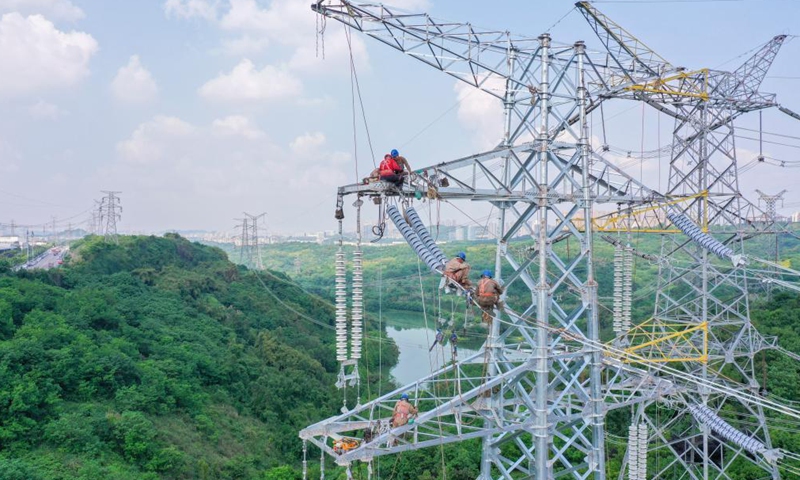
Argentina’s national energy authorities are drafting tender documents for the expansion of over 500 km of transmission. This represents an important point for the nation’s energy industry. The project encompasses grid development, regional connectivity, and energy safety. There is a rise in renewable energy capacity in areas like solar power in the northwest and wind energy in Patagonia. The extra 500 km of high-voltage transmission lines will ease congestion, enhance system reliability, and ease effective assessment of power delivery. The 500 km power line will aid Argentina in achieving its decarbonization objectives. It will aid in stabilizing the grid for variable generation and boost investor trust in upcoming renewable bids. This will be vital to incorporate clean energy into the national mix while lessening dependence on thermal generation. Utilizing the yoke plate enhances the structural strength, safety, and lifespan of the transmission line.
The yoke plate is a heavy, flat steel plate with holes, serving as a connection node. It helps connect structural members such as angles, chords, or bracings. The plate acts as the nerve center at a joint to collect forces from connected members. It transforms the collection of individual members into a single and coherent load-bearing unit. The holes allow several bolts per member connection. The plate allows bracing members coming from different spatial angles to converge.
The yoke plate locks the angles of the connected members to prevent slippage under uneven loads. It provides a rigid connection point that enhances their effective buckling length and stability. The 500 kV needs large safety clearances to ground and between phases. Using the plate ensures the tower maintains its design and shape. It also allows easier inspection for cracks and corrosion without dismantling the tower.
Effects of enhanced transmission lines on Argentina’s energy sector.
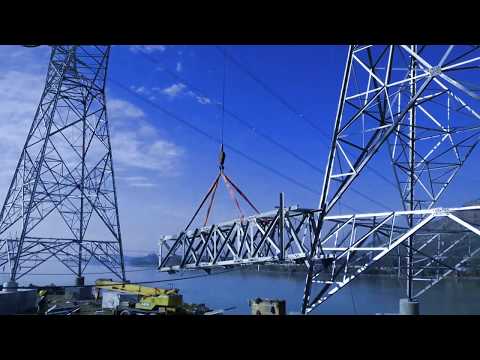
Enhanced transmission line growth and support bolster Argentina’s high-voltage infrastructure. This affects the nation’s production, markets, regional growth, and energy stability. Updated transmission lines cut congestion and renewable energy limitations, ease wind and solar integration, and enhance grid stability for fluctuating generation. Contemporary infrastructure enhances performance by decreasing outage occurrences and bolstering resilience against severe weather conditions.
Functions of the yoke plate in transmission line expansion
Argentina’s 500 km transmission line expansion uses yoke plates to enable mechanical stability, load distribution, and structural integrity across the transmission line. The yoke plate is a forged metal fitting used in high-voltage overhead transmission lines as part of the string hardware assembly. The expansion supports renewable integration and growing demand for power delivery. Here are the functions of the yoke plates in transmission lines.
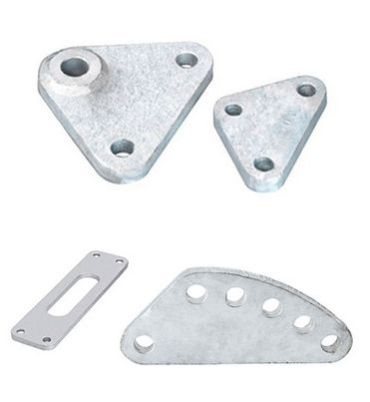
- Load distribution and mechanical balance—the yoke plate distributes mechanical loads across insulator strings and hardware connections. The yoke plate ensures the forces are well shared as compared to concentration at a single point.
- Structural stability—the yoke plate is a structural element providing a stable anchoring interface between insulators and tower crossarms. They help maintain conductor alignment and tower integrity.
- Connecting insulator to conductors—A yoke plate links the conductor termination hardware to the suspension insulators. It ensures the assembly can withstand both electrical and mechanical demands.
- Supporting multi-circuit and high-voltage configurations—the yoke plate’s design can accommodate different hardware configurations. It ensures consistent spacing and mechanical symmetry.
Argentina’s 500 km power line for regional integration and connectivity.
The expansion of the 500 km transmission line will promote regional integration and enhance interconnection with Argentina’s energy sector. The initiative reinforces national unity, boosts power sharing among provinces, and improves Argentina’s capacity to manage supply and demand. It serves many functions in Argentina’s connectivity and integration.
- Connecting generation centers and load hubs—Argentina’s significant wind, solar, and hydro projects, along with thermal assets, need robust interconnections to operate as a cohesive system. The transmission lines connect distant renewable energy production facilities to key urban and industrial consumption centers.
- Improving grid resilience and energy security—the new 500 km lines create power pathways during outages, lower the likelihood of cascading failures, and speed up recovery after severe weather conditions.
- Facilitating cross-border and regional energy integration—Argentina is improving its ability to engage in regional electricity exchanges and ease import and export flexibility with neighboring partners.
- Facilitating large-scale renewable energy integration—grid interconnection assists in handling the fluctuations of renewable energy. New transmission lines supported by yoke plates allow for decreased curtailment of wind and solar initiatives and enhance grid stability by expanding balancing areas.